


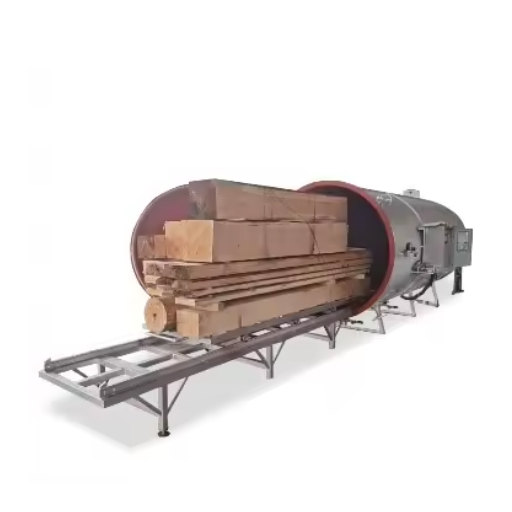

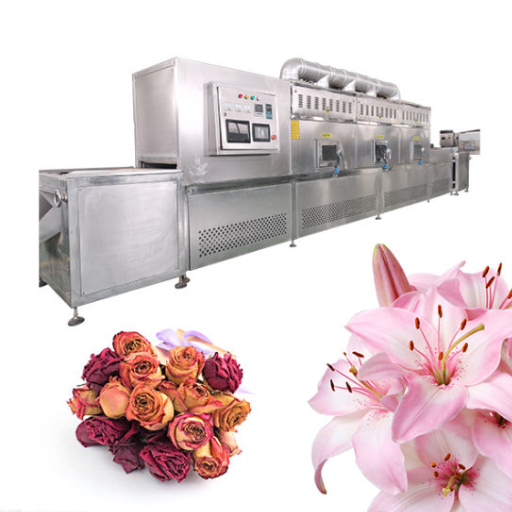


Your batch dryer has just completed the eighth cycle of the day. The loader-unloader is already tired of operating it. Meanwhile, the company across the river runs a continuous microwave dryer, never letting energy slip away. Their drying pace is a fraction of yours, operating with fewer hands-on workers and yet spending less energy per kilogram. The trickle of change bears an epoch-making shift.
To be perfectly honest, as long as there is more than 0.5 tons of dried end product in a day, I feel like I am trying to cope with something pressing down upon me. Of course, the batch system will introduce a bottleneck. It expects continual human attention. Here energy will be wasted. Why? Because, upon heating air, anywhere from 50 to 80% of the energy is lost.
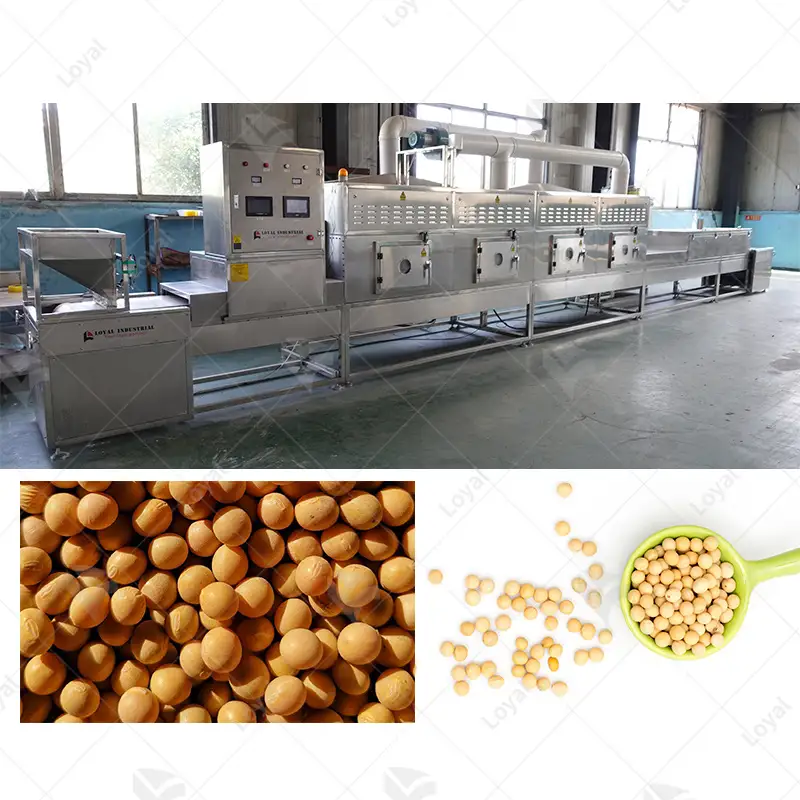
The advantages are plentiful of using a continuous microwave dryer over a production line. To put it simply, charge the product onto a conveyor belt and pull it through said belt via a sequential cycle into an electromagnetic field of predetermined strength. Drying is done uniformly from within and goes on uninterrupted.
You shall have an in-depth understanding of the functioning of continuous microwaves. What follows is a discourse, comparing to batch versions along cost, efficiency, or other facets; one will be needed to help select a type of material and throughput amount to begin sizing the unit; understand how to determine payoff vs. ROI for hundreds of cases, and to reflect on how to find and account for pricing that ranges from $10k for less base models to well over $250K and beyond. In conclusion, you will be empowered to make that tough choice—to decide whether or not the realities of implementing an automated system into your place outweigh the disadvantages.
Want to see how a continuous microwave dryer fits your production line? Contact our engineering team for a free facility assessment and custom configuration recommendation.
What Is a Continuous Microwave Dryer?
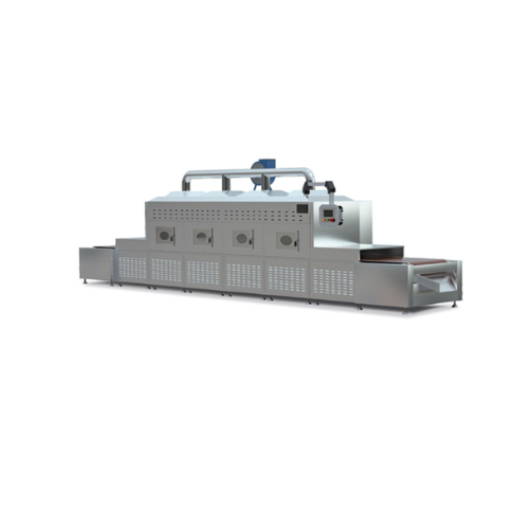
A continuous type of microwave dryer is an industrial drying system in which they process material continuously on a moving conveyor belt via a microwave chamber. This does make some sense as the term “continuous” differentiates itself away from batch ovens, which load, heat, and unload, one batch at a time. Continuous systems load the material at one end and remove the dried product from the other end-uninterrupted.
Microwave Drying Process: An Overview
Microwave energy penetrates the material very quickly, directly causing the water molecules to become excited. The molecules vibrate at extremely high speeds, causing the heat from within the product itself. Since this approach is known as volumetric heating, it is a vastly different technique from the standard hot-air drying by which the first heat source reaches the surface only to conduct on the interior. This makes it very fast.
As long as this heat arises from within the substances, they dry faster, more homogeneously, and have improved control on them. Surfaces do not split as easily, and, if any cracking exists, it is more of a plastic deformation instead of brittle cracking. Its fast operation doesn’t entertain case hardening, and owing to its even and fast heating, you can plainly see the disadvantages associated with the conventional dryers. Another determinant of drying action is the controlled belt speed, wherein moving particles would be accorded the necessary time to optimize for the best moisture levels without excessive drying.
Key Components
Key constituents of all the continuous microwave dryers are the following:
- A magnetron array that generates microwave energy at 2.45 GHz or 915 MHz; multiple magnetrons are employed in operational settings to make uniform power distribution that matches the width of the belt.
- Conveyance and Waveguide distribution system: A system that feeds microwave energy into the drying chamber fast and it does it evenly, preventing hot spots and cold zones.
- Conveyor belt: Serves to carry products out of the chamber at adjustable speeds. The belt material varies according to application, while PTFE-coated fiberglass is used in food applications, for example, especially in chemical settings.
- Drying chamber: A self-contained, cavity with microwaves whose shielded-walls absorb all the emittance, allowing the excess water to escape during controlled ventilation.
- Exhaust and dehumidification system: These devices absorb water vapor to ensure operational efficiency and prevent any chance of condensation.
- PLC control system: An ingenious setup of an operating system that looks after automation of endless parameters like belt speed, power output, temperature monitoring, and recipe management.
Continuous vs. Batch vs. Vacuum Microwave Dryers
Not every facility needs continuous processing. Here is how the three main types compare at a glance:
|
Feature |
Continuous Microwave Dryer |
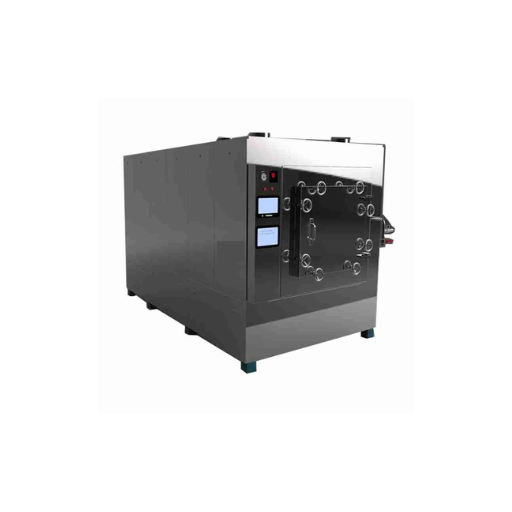
Batch Microwave Dryer |
Vacuum Microwave Dryer |
|---|---|---|---|
|
Throughput |
1,000–10,000 kg/h |
50–500 kg/cycle |
100–1,000 kg/h |
|
Ideal for |
High-volume single products |
Low-volume, multi-product |
Heat-sensitive materials |
|
Labor needs |
Low (automated) |
Medium (loading/unloading) |
Medium |
|
Energy per kg |
Lowest |
Higher |
Moderate |
|
Floor space |
Larger footprint |
Compact |
Moderate |
|
Capital cost |
18,000–18,000–250,000+ |
5,000–5,000–50,000 |
30,000–30,000–150,000 |
A continuous microwave dryer is suited for large-volume continuous processing of repeated ample of a single set or closely similar products. Batch operations are best for research and product development or in those installations that switch materials fairly often. Due to lower temperatures and reduced pressure under reflux, vacuum microwave dryers not only help in drying processes as applied to heat-sensitive products like spray-dried pharmaceutical granules or some spice extracts.
Continuous Microwave Dryer vs. Batch Microwave Dryer
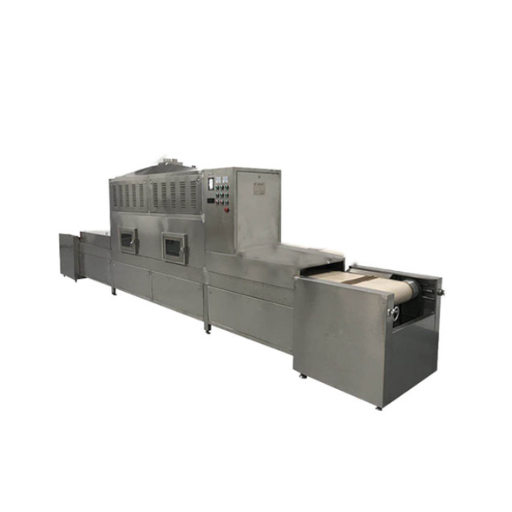
Looking at batch and continuous microwave technologies, according to this rather detailed report, says that most times, the inputs and outputs the plants use come down to special production requirements rather than technology adaptation. The following will show how the comparison turns out, on a broader level, to affect plant managers.
Capacity and Continuity in Production
The batch microwave oven processes one load then stops for unloading and loading. Even though the cycle time is reduced, the resultant “dead time” of this step adds up rapidly. In contrast, the continuous microwave dryer ensures that all this comes to an end.
When Mr. Raj Patel extended his spice processing plant in Gujarat in 2014, he was running three batch ovens in shifts, aiming to fulfill 3,000 kg of production daily. In each oven, 45 minutes was the hour spent for a batch cycle, and an additional 10 min were needed for loading and unloading-this is where his real troubles began.
With a single 50-kW continuous microwave dryer, throughput had instantly risen to 5,000 kg a day. He would only need one operator when the first one required three. The kilowatts per hour landed when the tool never stopped, and operation costs per kilogram of labor decreased by 60%.
Energy Efficiency per Production Unit
With each and aeronautical happy person; but most of its energy goes into warm dry air and metal, not into the product. A continuous microwave dryer directly introduces energy to the drying material as it passes through the chamber. No reheating and no wasted thermal mass.
Energy consumption in microwave drying runs between 1.2 and 2.0 MJ per kilogram of evaporated water. Conventional hot-air drying takes 3–5 MJ per kilogram. In all cases, we can count on a 20–40% energy savings over the conventional method, with some applications going down to 80% in savings. That is a significant savings on the utility bills over a year of continuous operation.
Drying Uniformity and Quality Consistency
Batch systems struggle with edge effects. Material near the chamber walls dries differently than material in the center. Operators must open doors, rotate trays, and except some innefficiency. In contrast to the present solutions, the continuous microwave dryer spreads uniform energy everywhere across the full width of the belt by means of a waveguide distribution array. Every particle equally gets the same treatment.
Harmony is crucial with regard to food safety and quality. A pet food manufacturer in Vietnam indicated that after they switched to continuous microwave drying, moisture variation fell from about ±3 to just ±0.5%. With this tighter control, mold could no longer grow, and shelf life increased by 40%.
Considerations of Floor Space and Factory Layout
Continuous systems require more linear space. Tunnels, typical of batch applications, often measure in the range of 6 to 15 meters long. Traditional batch ovens are always fitting in corners. However, continuous systems free up overall floor space by replacing multiple batch ovens. Most importantly, because they can be integrated into existing conveyor lines, they take away the otherwise necessary material handling steps in a batch application while increasing production.
Labar Requirements: Automation Potential
Batch dryers require one operator for each cycle. With minimal involvement by an on-duty technician, the microwave dryer operates continuously. In the event the system requires pressure proofing and the cost of skilled labor is high or the principal workforce is not in favor of this complete automation, payment justification will cover every penny spent up in these markets.
Maintenance Complexity and Operational Demands
Continuous systems have many moving parts. Belts. Bearings. Automated controls. Maintenance work is more specialized.
As long as continued operation is predictable, all that needs to be planned is maintenance down time. Could you imagine no longer environment in which you should get caught out during the 12-hour shift with a batch oven not running?
Normally, the expected lifetime of the magnetron is 6,000 to 10,000 hours. Fan belts are replaced every couple of years, on average, depending on the material they are transporting. Under the maintenance program, downtime is under 2% per year.
Which One Should You Choose?
Here is your choice framework.
Choose continuous if:
- Daily volume surpasses 1,000 kg of similar material
- You are using a means of setting up multiple batch ovens to meet demand
- Labor costs are increasing or trained operators are scarce
- Energy costs are a business enemy
- You need a true, repeatable drying arrangement for quality assurance
Choose batch if:
- You keep working on a variety of materials in small batches
- The flow is under 500 kg per day
- The plant can hardly find extra floor space for this equipment
- You require full flexibility in R&D or special projects
- Capital budget is confined, so fast paybacks become an absolute must.
Key Industries and Applications
Dedicative microwave driers are used in many industries. It is possible to adapt the technology of different belt materials, which lead to chamber lengths, power densities, and control recipes. It is from continuous operation that the utmost results are expected to be achieved.
Food industry
Fruits, vegetables, herbs, spices, and snack products can be dried rapidly while maintaining their color, flavor, and nutritional value. Using irradiation of garlic in the Shandong Province cut drying time from 6 hours to 8 minutes. The product retained its natural pungency and bright white color, which had always turned dull by hot-air drying.
Agriculture and Insect Protein
Among the fastest-growing applications nowadays are black fly larvae, mealworms, and grain applications. Insect protein plants need large-capacity drying procedures, which will thus make such facilities competitive. A continuous execution of 50 kW has the capacity to process 4,000 kg of BSF larvae per day and can carry out drying while at the same time sterilizing the larvae in one go.
Meat and Fish Processing
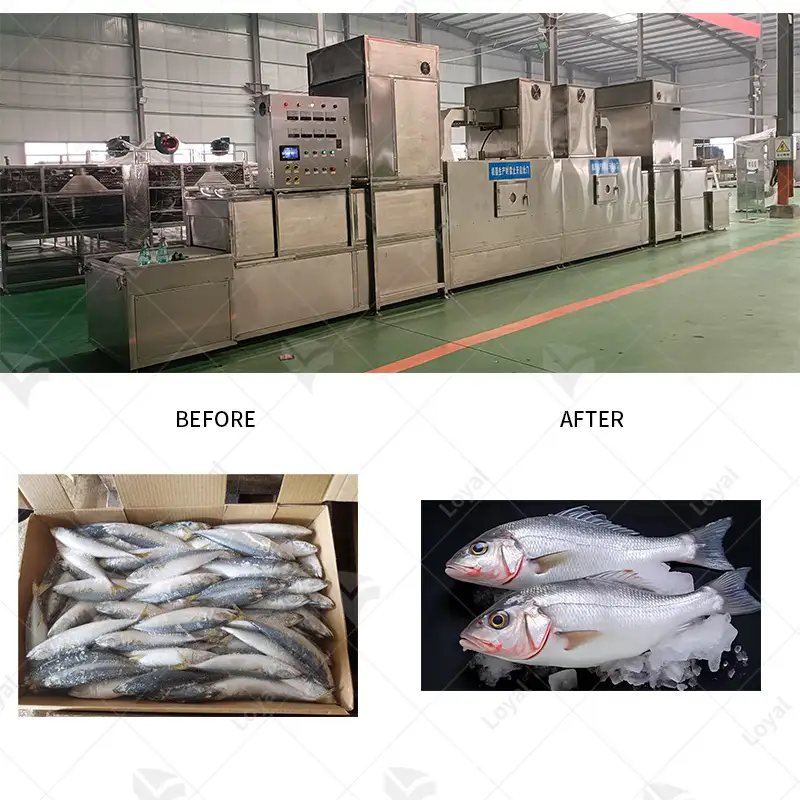
While slicing frozen meat, continuous microwave dryers have made a good mode of tempering it. They also process pre-cooked seafood for further processing and dehydrate jerky and dried fish products. The quick and even thawing helps minimize drip loss by keeping proteins from entering the danger zone of spoilage bacteria.
Pharmaceuticals & Nutraceuticals
Herbal extracts, powdered and granular materials need proper control of moisture content and contamination-free processing. For this purpose, the continuous microwave dryer is pertinent, particularly those with pharma-grade construction and FDAvalidated control systems. The pharmaceutical continuous processing sector is the one enjoying the highest growth area with new systems having been validated to conform to FDA 21 CFR Part 11 and GAMP guidelines.
Industrial Materials
The latex, chemicals, ceramics, and wood commodity groups all profit from rapid and uniform heat-up. An installation in Southeast Asia weighs 80 kW of continuous curing and drying time; the processing now takes six to nine minutes as opposed to three to four hours. Energy expenses were reduced by 35%, and the output quality improved dramatically.
Processing rubber or latex? Explore our latex and rubber microwave dryer solutions engineered for 6 to 9 minute curing cycles.
How to Specify a Continuous Microwave Dryer
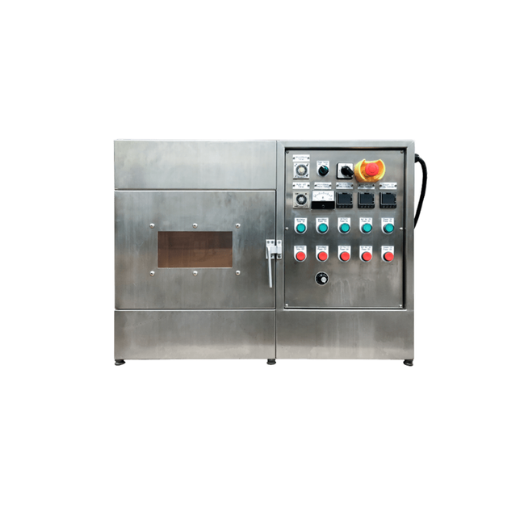
When buying the continuous microwave dryer, one must not treat it as an ordinary appliance purchase; specifications have to be compatible with the material and volume to be dried, and the modes of integration. Below is what to ask from your manufacturers.
Belt Width and Chamber Length
Belt width defines the quantity of material that passes through the microwave field in unit time. Standard belts range from 300 mm to 1,500 mm.
Chamber length influences dwell time. Short chambers would suit thin, porous materials very well. They dry faster. Longer chambers suit dense or bulky products that need extended exposure.
A turmeric process will need short chamber volumes and narrow belts since the powder layers need to be uniformly exposed to the energy field. For rubber sheets, a very large belt and a longer chamber will work as microwave material needs to get moved.
Microwave Power Rating and Magnetron Configuration
The power rating varies from 6 kW for lab purposes to 300+ kW for major industrial lines. More power does not always mean better drying. Power density, measured in watts per kilogram of products, is more important than total wattage.
The uniformity of the field is decided by the magnetron array configuration, where a misconfigurated form produces hot spots (leading to product scorching spots) or cold zones (leaving water). It is essential to request the vendor to provide computer-aided modeling of the electromagnetic field.
Control over conveyor speed and duration
Conveyor speed is going to directly cut directly through any dry time one should expect. The use of adjustable VFD motors differentiates the new development by the ability to change conveyor speed, prolonging or shortening total drying. The buyer is then advised to look out for storage devices that could store multiple recipes where each of them will have its own preset speed, power, and temperature profile options.
Material of Construction
In compliance with food-grade regulations, the use of the belt in food applications demands stainless steel SUS304 or SUS316 as the driving material. These should be accompanied by wear-resistant and hygiene-certified belts. In the chemical and related industrial manufacturing, carbon steel coated or highly specialized alloys selected are dependent on accompanying needs of corrosion protection.
PLC, HMI, and Recipe-Based Automation
Modern continuous microwave dryers feature HMI screens linked with PLC for easy touch-screen control. When operators switch in a recipe, the system pre-installs the cooking and belt speed, magnetron energy setting, and exhaust rate. Preventing human errors and offering batch-to-batch consistency.
Safety, Shielding, and Leak Compliance
Rules state that microwave ovens must not leak more microwaves than a maximum of 5 mW / cm2 measured from more than 5 cm away from the surface. Quality manufacturers use door interlock, choke seals, and continuous leakage monitoring. These critical competition standards should be fulfilled with a compliance certificate that is specific to your market that is CE for Europe, FDA for the US, or where it is needed in your local environment.
Integration in Downstream and Upstream operations.
Every other moment in your production line is a continuous microwave dryer. It must have the seamless delivery of material from the upstream end where washers, cutters, or mixers are located. From the downstream end of the line, where the product becomes dry and is pumped into the coolers, packaged, or stored, the fully dried product must be undelivered. Of course, what wants to be taken into account between the dryer, the front and posterior means, it is tall, and interface dimensions, and which protocol of control signals.
2026 Technology Trends in Continuous Microwave Drying
The technology is evolving rapidly. Three trends will reshape the market over the next two years.
Hybrid RF and Microwave Systems
Stalam began marketing the RF-NEXT hybrid system toward the end of 2024. Combining 27.12 MHz radio frequency with 2.45 GHz microwaves in one continuous line, RF energy is faster at expelling surface moisture. Microwave energy penetrates and dries the inside. This combination can also reduce total drying time by another 15-25% over systems that employ only microwave.
Solid-State Microwave Generators
Traditional magnetron-based microwave generators were vacuum tube misconceptions. Not only do they have a limited lifespan, but the frequency output is fixed. Using semiconductor technology, solid-state generators offer microwave energy that is modulable and extra-fast to respond with fine control of the specific frequency, short on-off switching time, and modular check-out. They have come to set themselves against the traditional magnetrons with life cycles of 5 to 10 times longer, permitting real-time power adjustment-electronic, no mechanical tuning. These changes were known by Powder and Bulk Solids in the year 2025.
Inline Moisture Sensing and Real-Time Process Control
A unit has NIR moisture sensors mounted near the exit of the dryer, and PLC real-time feedback allows for drought considerations. When too much moisture is detected, by a simple slowdown of the conveyer belt, the drying temperature would be reduced or by a speedup in the conveyer belt making the drying temperature higher till, what was implemented, reaches the set target. All of which are done with minimizing human intervention.
Continuous Microwave Dryer Pricing and Total Cost of Ownership
Price is only the starting point. Smart buyers evaluate total cost of ownership over the equipment lifespan.
Price Ranges by Power Tier
|
Power Tier |
Price Range (USD) |
Typical Applications |
|---|---|---|
|
6–15 kW |
7,400–7,400–12,000 |
Laboratory, pilot production, small food processors |
|
20–50 kW |
18,000–18,000–50,000 |
Medium food processing, spice drying, insect protein |
|
80–150 kW |
72,000–72,000–120,000 |
Large food lines, rubber curing, industrial materials |
|
300+ kW |
$250,000+ |
Heavy industrial, pharma-grade, multi-zone systems |
Factors That Affect Cost
When products are customized, price variations occur. For a strip-based system that has been engineered to handle a certain type of material, for a belt width and plant layout of your choosing, a standard catalog-based system may typically have a decor-segment product. If a unit is shipped to Europe or North America from China, this roughly implies certain additional costs of 5-10%. Further additional extent costs margin to the tune of 3-8% would care installations and commissioning sites. Given the line to why optional costs would be training on repair kits, consider negotiation right up front.
Calculating ROI
In most instances, industrial continuous microwave dryer programs provide a payback within 12 but less than 24 months. To determine precisely when the ROI will kick in, calculate as many of the following factors as you’re able:
- Production gain: Value of further production won as a result of drying completed in less time
- Energy savings: The difference in generation of unit electricity (kWh) between the existing and new installations multiplied by their respective annual volumes and the unit sales price of electricity in the region
- Labor reduction: Number of operators made redundant or retrained and the fully inclusive cost per hour
- Quality improvement: Gain from reduction in defective product, customer returns, or reprocessing expenses
- Maintenance: Annual maintenance costs incurred with new equipment versus those incurred with the older legacy equipment
A plant drying 2,000 kg every day that decreases labor by 50% and energy by 30% may possibly save up to 40,000to80,000 annually, vis-a vis, an initial investment of $50,000. This configuration typically returns initial capital expenditure within 7 to 15 months.
Maintenance Costs
Each magnetron costs $200-$500 apiece and lasts between 6,000 and 10,000 hours. Therefore, a 50 kW system, which requires 10 magnetrons, may expect cost of $2000-$5000 every 2 to 3 years for replacements. Conveyor belts last 2 to 3 years and cost $1000-$3000 to replace. Annual preventive maintenance contracts usually range from 3% to 5% of the equipment purchase price.
Ready to calculate ROI for your facility? Request a custom quote and our engineers will model your payback period using your actual volume, material, and utility costs.
How Shandong Loyal Industrial Engineers Custom Continuous Solutions
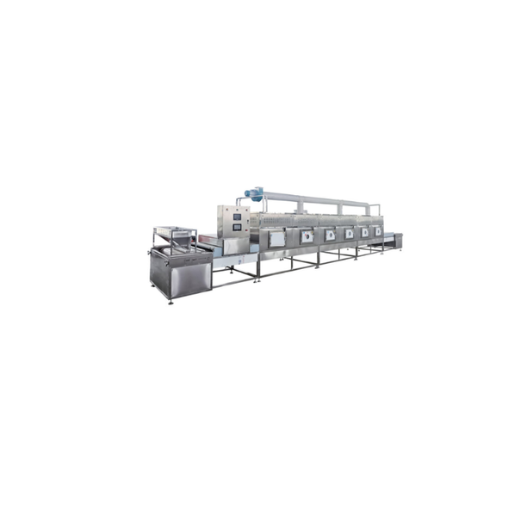
Shandong Loyal Industrial Co., Ltd. designs and manufactures continuous microwave dryers at their facility in Jinan City, Shandong Province, China, which does not sell through any catalogs. We engineer for solutions.
Application-Driven Design
Material testing is the beginning of every project we handle. We dry the samples of your actual product in our pilot continuous microwave dryer and gather information including moisture removal speed, temperature distribution and quality metrics. This data helps us to design the proper belt width, chamber length, power density, and conveyor speed for your specific material.
Integration with Existing Production Lines
Our engineers will either visit your site or inspect your layout drawings before designing infeed and outfeed interfaces that will work with your existing conveyors, washers, cutters, and packaging equipment. Should you require, control systems will be configured to communicate with your factory SCADA or MES.
Installation, Training and Technical Support Worldwide
Our operations extend to the corners of the globe. And with installation supervision, operator training, and on-site commissioning support, we can ensure our clients obtain seamless technology transfer. The commissioning authorities make themselves available for troubleshooting, spare part supply, and air freight to provide services for their existing customers over the course of time for the equipment’s lifecycle.
Conclusion
A microwave continuous flow dryer converts the drying process from a slow bottleneck into a competitive advantage. Faster drying process, lower energy use per kg, consistent quality day after day, coupled with a lower number of operators demanded over batch drying setups make the operating economics of facilities from 1000+ kg per day with similar materials quite striking.
Following points may be noted for their interpretations:
- The microwave continuous flow dryer gets the dielectric heating principle in place for microwave drying; the material moves continuously on the belt.
- Drying time can be shortened from hours to a few minutes, and energy savings of over 20% to 40% are achieved uniformly.
- Capital costs go from $18,000 for the medium-size system to $250.000 plus for heavy industrial lines.
- Time for break-even is normally between 12 and 24 months, with the increase in throughput, heavy savings in fuel, and reduction in labor.
- The desired results must be achieved through selecting a belt whose width, chamber length, power density, and control systems cater to the individuality of your material and capacity.
The real question is not if microwave is going to work well enough. It can. The real question is more whether the level of continuity, type of material, or future growth would justify the investment from now or later on.
Speak with our engineering team today. Contact Shandong Loyal Industrial to schedule a material test, receive a custom configuration proposal, and get a detailed ROI analysis for your facility. We engineer the continuous microwave drying solution that matches your production goals.