


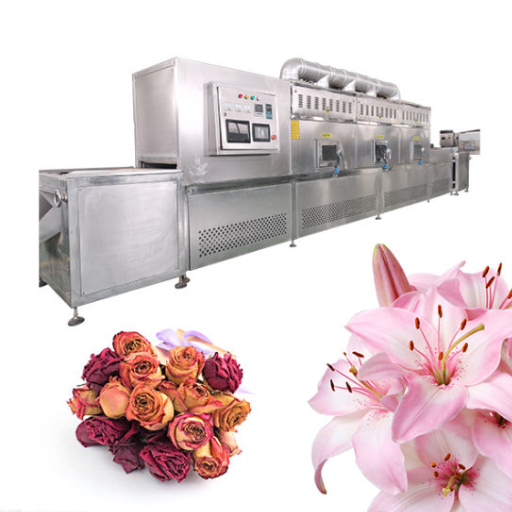


Today, heat dissipation on the drying of fruits and vegetables claimed as large as a 60% disintegrate on Vitamin C before further processing or proceeding to pre-packaging. Such losses might be afford for a food processor focused on quality and clean-label credentials. Many fields of products do their own microwave drying. This new technology is totally unique and is characterized by the even distribution of volume in the entire package, causing the removal of moisture from the inside of the food outward. The big payoff is in the cutting down of drying time by 75%-90%, maintenance of color, flavor, and robust nutrition that clients enjoy.
To pass through many food logistics companies, one must at least go through a food production facility. So, for these companies still using conventional drying systems, all problems are known. Increased cycle times from using such conventional systems choke throughput. Additionally, all the problems, such as case hardening and wet cores and uneven heating, are introduced. Energy costs are on the rise due to poor quality. What is needed is a drying process that is specially designed to match the speed goals set by the needs of production.
The objective of this guide is to walk you through the concept of how microwave drying works for the food processing industry, examine various real food items as good examples illustrating between the use of hot air and freeze drying, assess which commodities can boost their quality a hundredfold through the technology, and decide upon what aspects to consider most when choosing to purchase a microwave dryer. Each section is intended to serve as support in starting assembly capital arguments to the operations director.
On taking on the role of plant manager at a Californian fruit-chips production unit early this year, Marcus found that the hot-air drying line there was running for eight hours per batch. But the previous plant manager had considered giving six hours for each batch as standard practice. Marcus wouldn’t bear it. The pilot-tunnel microwave dryer used by him has therefore reduced both drying time (ninety minutes to forty-five minutes) and increased the retention of Vitamin C (261% to 339%). There was a drop of 30% in the energy costs in only the first quarter he worked there. That illustrates what industrial microwave drying can do mechanically when the latter is correctly engineered for that specific product.
What Is Microwave Drying in Food Processing?
Microwave drying in food processing is a technique that employs electromagnetic energy in the 915 MHz or 2.45 GHz range to heat the water molecules directly within the food material. Unlike conventional hot-air systems in which the heat is transferred from the outside in, microwave dryers produce heat volumetrically. This heating causes the water molecules to vibrate and create considerable friction, thereby generating “internal heat” and thus taking moisture out quickly and uniformly.
Thus, the moisture-gradient issue typical in traditional drying is eliminated. In a hot-air chamber, the surface would dry first and form a hard shell around the remaining moisture, pushing operators to either increase the cycle time or give in to an uneven product. Microwave drying avoids case hardening: instantaneous evaporation creates an equal amount of moisture per unit area over the very core of the material.
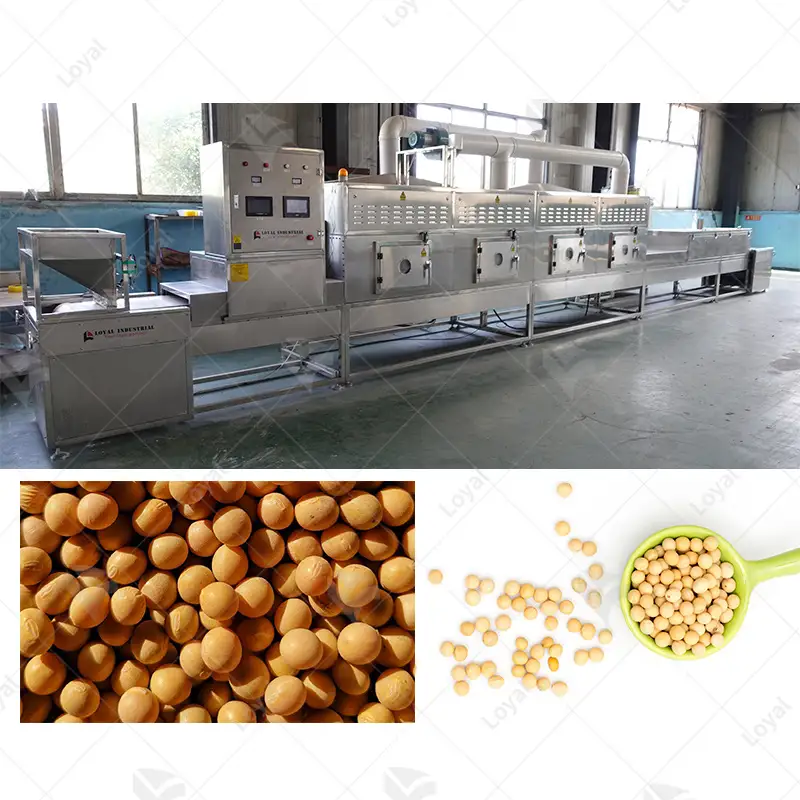
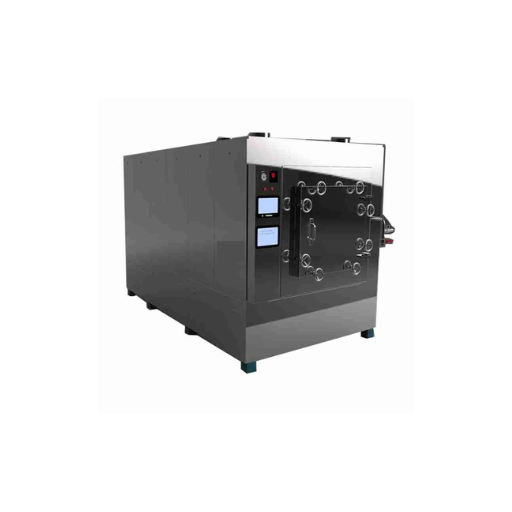
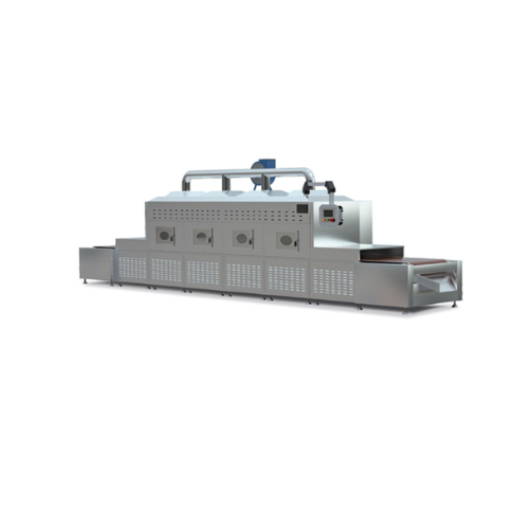
Industrial microwave-drying equipment is no scaled-up domestic microwave oven. At home, they run on miniature 2.45 GHz magnetrons type for such low power and in an application that seems as far removed from this as possible. In particular, the magnetrons of industrial machines are very powerful units. They are supplied sometimes with impeccable waveguides and sealed stainless-steel applicator chambers designed for 24-hour, multiply-shift operation. The configurations for this consist of continuous tunnel dryers with high-volume lines, batch-wise vacuum belt ditto for heat-sensitive products, and batch tray-type systems that produce small quantities, typically for R&D or specialty applications.
Materials adapted for food manufacturing are mostly built from 304 or 316 stainless steel, and will meet the HACCP and GMP standards. Industrial microwave-drying machinery also interfaces directly with conveyors, packers, and other operations. When choosing your first industrial microwave drying apparatus, it is good to first decide to outline in your head a distinction between the microwaving of domestic and industrial loads, thus using it as a first filter.
How Microwave Drying Works: The Science of Food-Grade Volumetric Heating
If you want to troubleshoot problems during food drying, it is first required that you understand the mechanics of microwave drying. The process involves the penetration of the food material by the microwave energy medium, whereby the microwave will interact with the food’s polar molecules, which includes water essentially. These polar molecules, responding to the oscillation of an electromagnetic field, cause high-speed molecular friction inside the material to generate heat.
At this stage, penetration occurs deeper or depends on frequency and the dielectric properties of the food. The 915 MHz frequency gives deeper penetration and is favorable for high-moisture bulky items, e.g. beef slabs or thick vegetable pastes. The 2.45 GHz frequency offers both higher energy density and precise control, so it’s great for small, uniformly sized items like herbs, spices, or thin slices of fruit.
Microwave heating varies for different foods depending on the moisture content, salt concentration, and fat percentage. Foods with high salt concentrations respond to microwave heating much more quickly. Foods with high levels of fat must be carefully heated to ensure that thermal runaway does not occur. Thus, PLCs with real-time temperature and moisture sensors are utilized for the control of magnetron output in industrial microwave systems.
Drying profiles are therefore set according to the system design. Continuous tunnel dryers intend for a conveyor belt to move the product through a multiplicity of microwave zones and are an excellent choice for processors of pasta, grains, and snacks incorporating thousands of kilograms in every hour. Under partial pressure, vacuum microwave dryers keep chamber pressures at much lower levels, thereby discretely lowering the water boiling point to some 30-50 degrees Celsius. This low-temperature environment will preserve thermo-sensitive vitamins and natural pigments. The batch tray system can serve a purpose of pilot testing; thus, one may revert to tweaking small-run specialty products.
Want to see how continuous microwave drying equipment integrates into a production line? Explore our tunnel dryer configurations and request a facility layout assessment.
Microwave Drying vs. Hot Air vs. Freeze Drying: A Food-Specific Comparison
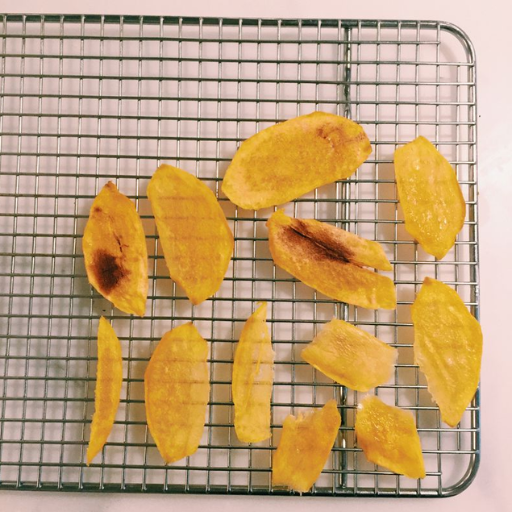
Plant managers often ponder, “Is it worth it to spend the capital on microwave drying rather than just upgrading an existing hot-forced-air line or opting for freeze drying?” Well, the right answer may hinge largely upon one’s product, on volumes, and on quality targets. Following are the salient differences in this respect.
|
Factor |
Microwave Drying |
Hot Air Drying |
Freeze Drying |
|---|---|---|---|
|
Processing Time |
50-90% faster |
Baseline |
24-48 hours |
|
Energy Use (kWh/kg water removed) |
1-1.5 |
1.5-4.0 |
10-15 |
|
Nutrient Retention |
High |
Moderate (heat degradation) |
Very High |
|
Color/Flavor Preservation |
Excellent |
Fair (browning, oxidation) |
Excellent |
|
Case Hardening Risk |
Minimal |
High |
None |
|
Rehydration Quality |
Good |
Fair |
Excellent |
|
Capital Cost |
Medium-High |
Low-Medium |
Very High |
|
Operating Cost |
Low |
Medium |
Very High |
|
Best Applications |
Snacks, fruits, meat, grains |
Low-value bulk commodities |
Premium instant coffee, pharmaceuticals |
Hot air drying is still cost-effective for low-cost bulk commodities where the retention of healthful nutrients might not work effectively as a selling argument. Freeze drying provides superior drying for top-category materials under the premium heading – things like instant coffee and certain pharmaceuticals. Nevertheless, for the great majority of food industry operators, it is microwave drying that stands as the middle-road option. Microwave drying might just yield near-freeze-dried quality individually for only a bit of the capital and operating costs. Throughput dwarfs hot air.
Many processors will have ample occurrence of case hardening to justify changing over. In the instance where a tomato powder facility in Spain substituted a hot-air line with a hybrid microwave-hot-air system, improvements to moisture evenness went from +/- 4% to just +/- 1.2%. This level of consistency prevented costly rework, cutting customer gripes by 90%.
Ready to compare operating costs for your specific product? Contact our engineering team for a side-by-side drying analysis tailored to your facility.
Key Food Applications by Category
The microwave drying of food remains a significant tool in this ever-evolving and humanity-serving sector. This technology is adaptable to fruits, vegetables, meat, seafood, grains, snacks, and emerging categories such as insect protein. Opening down under is the most profitable application with practiced consideration for these.
Fruits and Vegetables
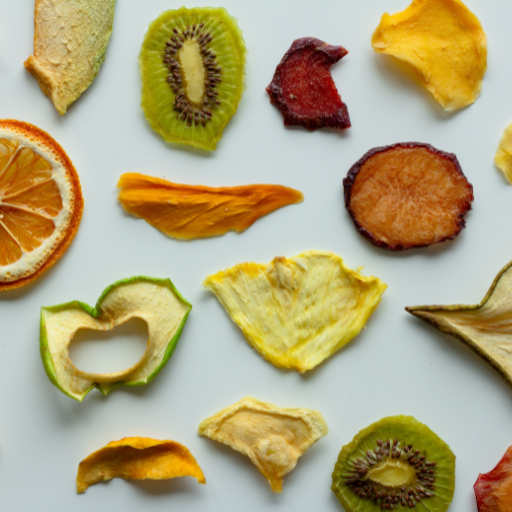
Absence of any doubts, but it is true that there are sizeable industrial microwave installations in place for the production of fruit and vegetable materials. One of the results is that apple, banana, and strawberry slices have a delightful crust of microwave energy that creates a natural puffing effect for ensuing crispy chips instead of fried oil. The soil atmosphere created by rapid evaporation under a vacuum causes cell walls to swell, creating a lightweight, frostlike texture that invites premium shelf prices.
Vegetable powders along the same lines. Carrots, spinach, and beetroot dried with microwave retain a brighter color and a higher count of antioxidants compared to air-dried dried materials. The vacuum condition is applied to preserve heat-sensitive curcuminic compounds in the production of turmeric. Shandong Loyal’s foremost application itself displays a perfect vacuum condition. Our vacuum microwave systems are used to dry turmeric at temperatures under 50 degrees Celsius, protecting the bioactive compounds that high air temperatures would eliminate.
Herbs and spices must have their drying done quickly and at low temperatures to save the fragile essential oils. For instance, basil, oregano, rosemary, and chili powder tend to lose robust aromatic potency when exposed to heat for long periods. Microwave drying redresses the balance-in a matter of minutes in contrast to the hours required using other heating methods-for flavor profiles that chefs and food manufacturers shell out their money for.
Before she took over as quality manager for a Mediterranean spice company, batches of basil saw a staggering 40 percent loss in volatile oil during the hot-air cycle that lasted six hours. She opted for batch vacuum microwave dryers, which dried batches in twelve minutes; during that fast time, oil was found to be intact at a 92% level. Her wholesale clientele could tell the difference in aroma intensity at once.
Meat, Seafood, and Protein Products
Production of meat snacks is one of the older applications of microwaves in industry. Jerkies, dried poultry strips, and protein crisps can dry very quickly while consistently maintaining their structural capabilities. Microwave energy penetrates dense muscle tissues evenly to avoid surface burning and interior moisture characteristic in convective ovens.
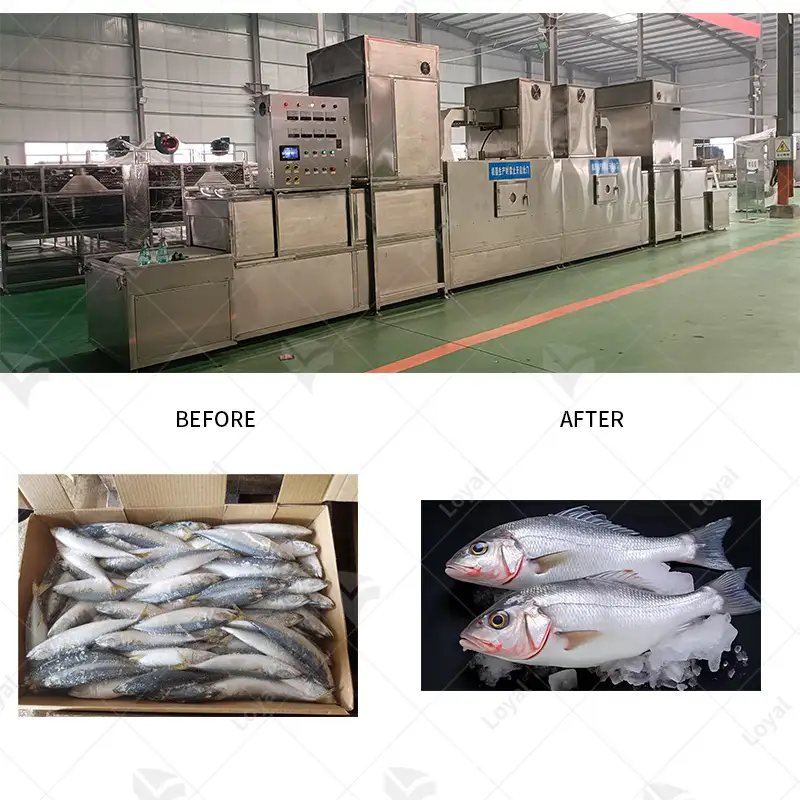
Bacon pre-cooking is another high-volume for use cases. Continuous tunnel systems can process bacon strips that exceed one thousand kilograms per hour, thereby providing uniformity in end cooking with minimal shrinkage. On the other hand, seafood processors use microwave tempering, which can unfreeze fish and jumbo shrimp from -18 °C to temperatures for cutting within minutes instead of days.
The rapid drying of black soldier fly larvae (BSF) and mealworms to retain the amino acid profiles required for animal feed and human-grade protein products is being driven by a nascent insect-protein sector. L-Lysine and other vital nutrients are altered with losses in traditional roasting or hot-air drying. The drying of BSF larvae may be completed in fewer than 10 min with 85% nutritional retention under simple microwave operation.
Grains, Snacks, and Ready-to-Eat Products
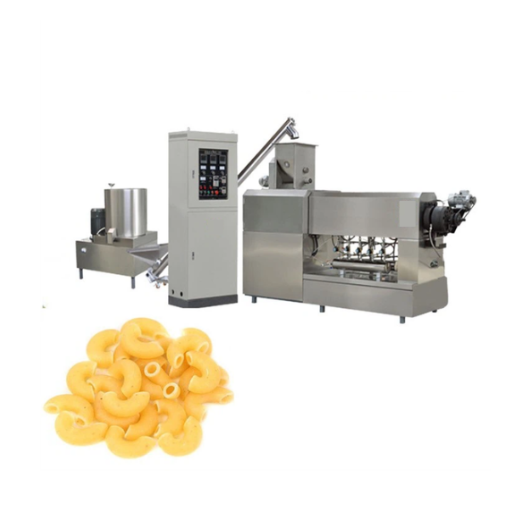
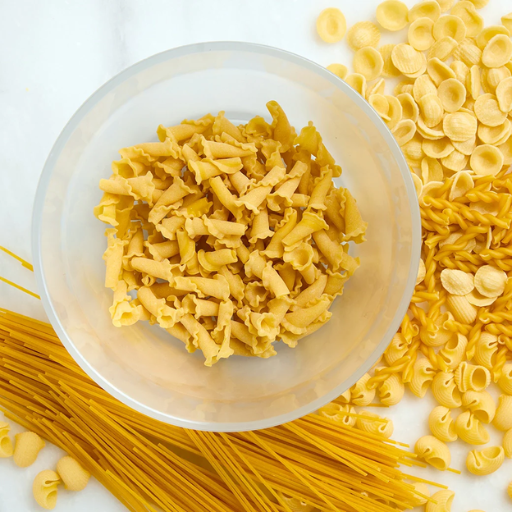
Pasta drying is a foremost application for continuous microwave tunnel systems. Major producers are using hybrid microwave-hot air tunnels to cut drying times from eight hours down to less than ninety minutes while still obtaining al dente pasta that defines quality. This technology has been applied to breakfast cereals, rice noodles, and instant-grain products.
Pet food and animal feed are major fast-growing markets. Extrusion of pet food kibble results in about 20-30% moisture content after forming. The KMEC allows the even fugitive shaping during microwave finish-drying, which brings down the moisture to 8-10%, which helps prevent spoilage while extending shelf life of the finished products properly, thus omitting chemical preservatives. For clean-label pet food brands, that chemical-free drying process represents the number one claim in their marketing statement.
Microwave drying is often used to produce light-weight, ready meal ingredients, from cooked rice all the way to vegetable medleys. The option of dehydration under low temperatures, in a vacuum, saves the natural texture of pre-cooked vegetables, sans any undesired sogginess caused by conventional drying.
Nutritional and Quality Benefits of Microwave-Dried Food
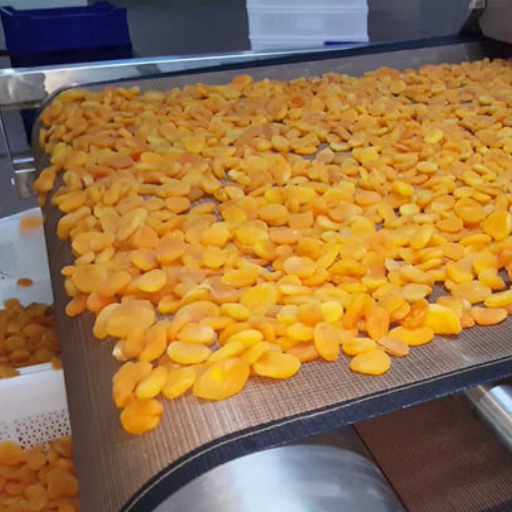
Cold-air drying is a nutritional way to dry food based on data and facts. Microwaves use lower temperatures and lower residence times than are found in heated-air dryers, thus lessening the loss of heat-sensitive vitamins. Fruits dried by microwaving may be able to retain up to 90% more vitamin C than when dried by air drying. Similar increases in the retention of polyphenols in berries and herbs are also seen.
Conservation of the protein continues to be of equal importance. Denaturation of some proteins occurs when the bones of the animals or insects are heated to 70 ℃ or higher for too long, making them both functionally impaired and less digestible. In microwave drying, on the other hand, proteins do not reach the critical, temperature to which thermal denaturation could lead and thus maintain higher nutritional bioavailability and protection.
Color and flavor preservation and its corresponding monetary value are quite inversely related. In the microwave environment, browned Maillard effect is controlled, associated with browning in hot air dryers. The surface temperature largely remains below, thus keeping the carrots bright orange, the basil day-glow green, or the strawberry powder inside intensely red without sulphuring or chemically induced colorants.
Water activity is a significant determinant of the storage stability or spoilage of a product. In microwave drying, the water activity below 0.6 all across the product matrix breaks the growth of microbes. No moist pocket spoilage, as often seen in hot-air drying, now exists, thus yielding consistent cooking quality.
These benefits get amplified by the clean-label trend-session. No longer do kemical preservatives and artificial additives find much appeal. Brands globally need to introduce the natural preservation statement by using microwave drying to the consumer populations as a brand-building symbol.
2026 Technology Trends for Food-Grade Microwave Systems
The industrial microwave market is experiencing rapid changes. The global industrial microwave heating equipment market will generate about USD 1.84 billion in 2025 according to industry forecasts which show that the market will grow to USD 1.98 billion in 2026 and reach USD 4.12 billion by 2035 with a 7.6 percent CAGR. About 38 to 40 percent of this market comes from food processing and drying activities. Three technology trends are reshaping how processors deploy microwave drying food systems.
The hybrid systems market grows at the fastest rate between 10.2 percent CAGR. The system configurations use microwave energy together with hot air or infrared or steam for better operational efficiency and product quality. A hybrid line might use microwaves to remove bound internal moisture while hot air handles surface evaporation, achieving the best of both technologies. SAIREM launched its hybrid microwave-convection system in August 2025 which claims to provide 40 percent energy savings through its process monitoring system.
AI and IoT integration is moving from marketing claim to operational reality. The current systems utilize moisture sensors together with thermal cameras and machine-learning algorithms to control magnetron power operations in actual time. Predictive maintenance tracks magnetron performance to create failure alerts for operators. The system uses autonomous tuning to control product changes without requiring any manual adjustments.
The premium product market for vacuum microwave continues to grow because consumers show an increasing willingness to pay top prices for high-quality products. Low-temperature drying at 30-50 degrees Celsius produces fruits, herbs, and proteins with sensory profiles that rival freeze-dried products at one-third the energy cost. The Asia Pacific region leads in market adoption because food processing capacity expansion and quality standards development will drive a 9.4 percent CAGR growth rate.
Selecting the Right Microwave Drying System for Food Production
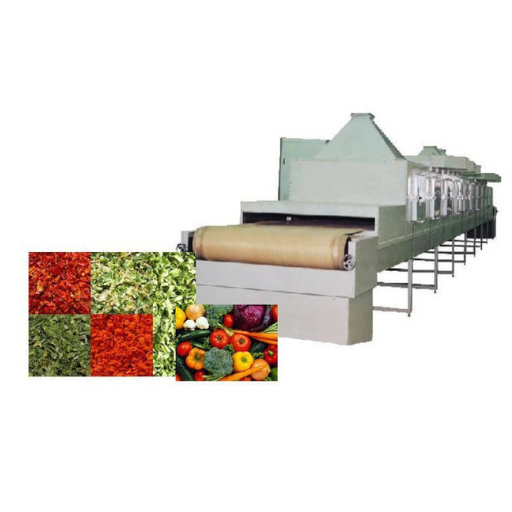
The process of selecting appropriate microwave drying equipment for food requires the assessment of five different elements which include product characteristics and production needs and food safety regulations and existing facility limitations and the abilities of the equipment manufacturer.
Product properties determine frequency, power density, and chamber configuration. 915 MHz should be used to achieve deep penetration into high-moisture dense products. Vacuum systems must operate at 2.45 GHz for the protection of delicate items which are sensitive to heat. The production of sugary or fatty foods needs precise power control to avoid the occurrence of thermal runaway. The actual product needs pilot testing to determine its performance before establishing the production line specifications.
Throughput requirements dictate batch versus continuous architecture. The batch tray system operates between 10 to 50 kilograms per cycle which makes it suitable for R&D work and special product development. The continuous tunnel dryer system operates at a processing capacity between 1,000 to 10,000 kilograms per hour which enables it to work directly with upstream washing and cutting and downstream packaging systems.
Food safety standards are non-negotiable. The system needs to be constructed from 304 or 316 stainless steel with HACCP-compliant design and clean-in-place functionality. The sealed chambers stop environmental contamination from re-entering the system during the drying process. The production of pharmaceutical-grade food ingredients requires GMP compliance and batch documentation as extra mandatory standards.
Infrastructure limits itself through three main factors which include available floor space and electrical capacity and exhaust ventilation. High-power continuous lines need dedicated transformers together with water-cooled magnetrons for their operation. Vacuum systems require both vacuum pumps and condensate recovery systems for their operation. A qualified manufacturer evaluates these constraints during the proposal phase.
The difference between manufacturer capability and installation success results in costly installation errors. The ideal supplier should have demonstrated food industry expertise, provide installation assistance at customer locations, create programs for training operators, and deliver prompt technical support. The presence of custom engineering capabilities becomes essential because every production line possesses distinct characteristics. The design team at Shandong Loyal develops tunnel dimensions together with conveyor materials and power system layouts which correspond to particular factory setups and product specifications.
David treated his Vietnamese BSF larvae facility operations through his first acquisition of a standard dryer which sellers called an “agricultural products” dryer. The larvae exterior experienced burning while the interior remained wet. He achieved consistent moisture content after implementing a Shandong Loyal continuous tunnel system which had been designed for insect protein processing. Energy consumption decreased by 42% and his feed-grade protein certification passed on the first inspection.
Conclusion
The process of microwave drying food has achieved standard status in modern food processing. It is the established standard for processors who refuse to compromise between speed, quality, and cost. The evidence proves that volumetric heating reduces drying times by 90% while maintaining essential nutrients which hot air destroys and requires less energy to operate than traditional methods.
Your facility needs to understand this information which provides essential guidance. First, understand your product’s dielectric properties and moisture profile before selecting equipment. Second, businesses that handle premium heat-sensitive foods should make hybrid or vacuum systems their first choice. Third, every supplier must demonstrate food-grade stainless construction and HACCP compliance to meet your requirements. Fourth, you should require pilot testing and custom engineering instead of accepting standard equipment.
The global food processing industry is moving toward faster, cleaner, and more efficient drying methods. The microwave technology users who adopt it today will gain market advantage over competitors who continue using traditional hot-air systems.
Speak with our engineering team today to configure a microwave drying solution for your specific food production line. Request a custom quote and facility assessment.