





It may take almost an entire week before the roses put out in a single batch begin to emit air-dried property due to the drying process. By that time, the very great red of the petals intoxicating smell, as well as great commercial value held in the volatile oils, hands it over to the atmosphere. For the whole week, his/her given workspace had been taken up for hanging racks. In less than a quarter of an hour, emerging from microwave flower drying is a product that maintains the true color, shape, and scent compound most in demand for their tea, beauty, or medical applications.
You know full well that product value relies heavily on the dry method. However, this pertains to the microwave drying technique-how it does not involve one form of dehydration that comes to exist in the other. Dehydration happens to be a matter of irreflexivity; no one can tell by dismissing it what possible advantages this technology may have up its sleeves. Whether it is by exploiting customers’ waiting time with safe and effective alternatives to traditional delicate flowers or merely gaining ground of alternative markets when faced with the undeniable challenges by the client, microwaved dried processing plant signifies the former stroking of science in playing Cupid to crops.
This guide teaches you how industrial microwave flower drying technology works, which botanicals show promise, how it compares to air drying, freeze drying, and hot-air methods, and how to size a system to meet the individual needs of your flower type and production level. We will also touch on color preservation science, cite estimates of essential oil retention data, and introduce the ROI framework you hopefully will find invaluable in justifying capital investment before your procurement team/apis.
What Is Microwave Flower Drying?
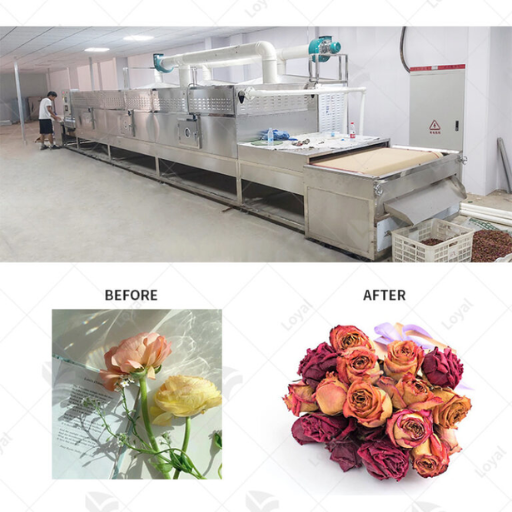
Industrial microwave drying imparts controlled electromagnetic energy at 2450 MHz. The electromagnetic energy heats the water molecule within the petal of the flower and thus the botanical tissue. In the case of industrial dryers bunlt for using air, the plant’s tissue is heated from the outside in; however, with microwave energy, the heat is generated in an indirect penetration manner through the material. As the electrical field changes the dipole moment of water, the water molecules rotate in an attempt to align themselves with the field oscillations stopped the polarization of the water molecules towards the field which resulted in a change in heat. The changing pole phenomena lead to an increase in vibration, hence to heating, and evaporation. This way, moisture is transferred from the middle of the flower to the outside, with the speed that ensures the drying is rapid.
This is crucial for flowers because: The petals are fragile. A seemingly minor ‘hardened outer skin’ would then mean ‘more imperiled against rains.’ When you make an observation on a flower’s water inside, In every respect, why put water there if flowers all told do not contain it, since water vapor is best; that moisture trapped for long can bring on browning, mold, and sometimes undulating roughness. The correct removal of all moisture is achieved through microwave drying.
How Industrial Microwave Drying Works with Botanicals-
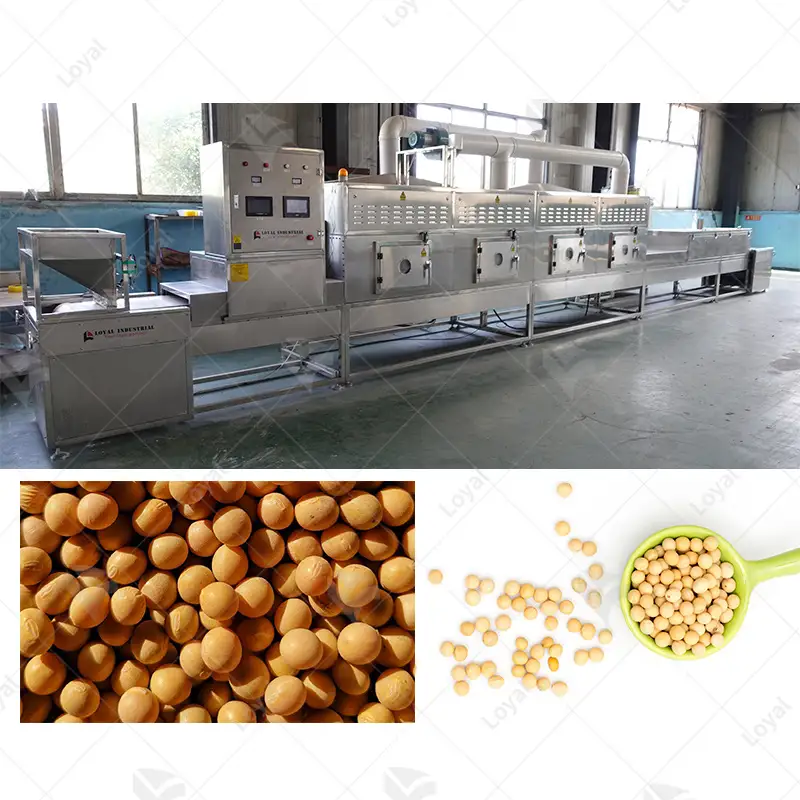
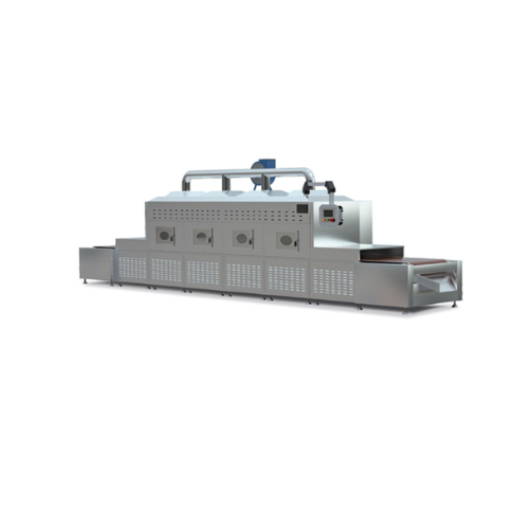
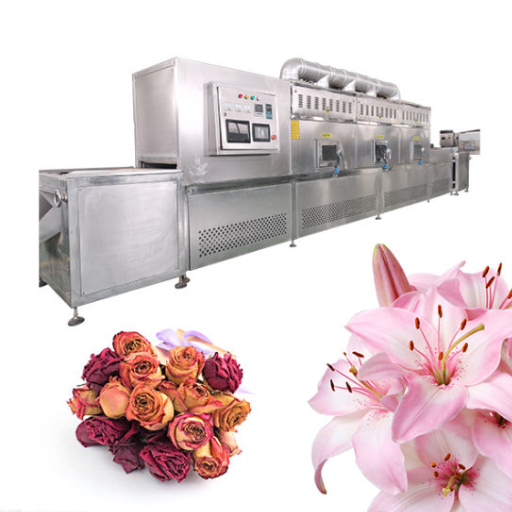
An ordinary industrial microwave flower dryer would basically be consisted of ∣∣ a magnetron array, a waveguide distribution system, a stainless steel drying chamber, conveyor belt or batch cart, exhaust and dehumidification system, and a PLC touchscreen control panel. The magnetrons provide microwave energy, which is distributed evenly by waveguides to all parts of the chamber.
Flowers are fed into the chamber on a food-grade conveyor belt, and the surface, core temperature balances are continuously monitored by infrared temperature sensors. The PLC adjusts the magnetron output and the conveyor speed to maintain the temperature profile accurately. The moist air is sucked out through an exhaust pathway. The final product moves out through the other end without any stop.
The Science of Color Preservation
The primary reason the flowers darken during traditional drying is due to Polyphenol oxidase. This oxidase, when it reacts with oxygen, causes the discolouration. Microwave drying will, in those first sixty to ninety seconds of exposure, heat the tissue deep within the material so that the enzyme becomes deactivated. When the enzyme is no longer active, the natural pigments under consideration would be fixed in place before oxidation occurs.
Research results gathered regarding honeysuckle and chrysanthemum processing show that, while making the process faster, microwave drying also keeps the chlorogenic acid content high and offers brighter, prettier colour than sun-drying or air-drying. This feature wears well for flower tea producers in terms of quality grades and better export prices.
Equipment Types for Flower Processing
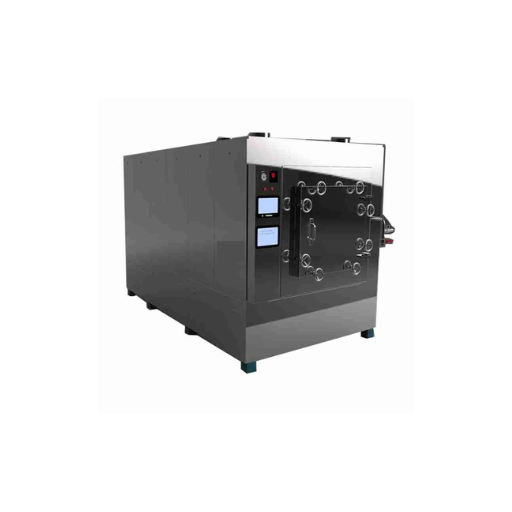
The botanical industry is served by three main dryer configurations. The batch cabinet-type dryers are suited for small-scale operations, research facilities, and multi-product processors who switch flower types more often. High-volume continuous tunnel dryers are designed for automated throughput of 100-2500 kg per hour, while the enterprise of high-energy input vacuum microwave dryers combines microwave energy with reduced pressure. Low-temperature drying maximally retains essential oil, as in pharmaceutical and cosmetic applications.
Want to see which dryer configuration fits your flower type and volume? Explore our industrial microwave drying systems and compare specifications side by side.
Why Microwave Drying Outperforms Traditional Methods
While exploring several drying methods for exporting chrysanthemum tea in Anhui Province, Chen Wei used four drying techniques in a test on the same harvest batch. Sun drying took six days for very uneven color and visible insect damage. Hot-air oven drying took eight hours, browning the edges of the petals and reducing the aromatic intensity by about forty percent. Freeze drying did maintain the quality, yet it consumed sixty percent more energy and capital investment which his facility could not invest.
The Microwave Tunnel drying time for the same batch was eleven minutes. The color remained uniformly golden. The aroma profile tested within five percent of fresh-picked samples. The energy cost per kilogram of dried product was one-third compared to hot-air oven drying. The order for a fifty-kilowatt continuous tunnel system was placed the following month by Chen Wei.
Microwave vs. Air Drying
Air-drying is perhaps the most ancient method. Blooms are come out in dark, ventilated rooms. The room is dark and ventilated for five to ten days. Only little investment in equipment is required. This explains the long-standing preference for small-scale producers. However, commercial enterprises suffer many disadvantages.
Ambient dust, insects, and microbial contamination pose disastrous challenges to flower quality apart from the aesthetic perspective during air drying. Color fades due to the long time of enzymatic oxidation and light exposure. Volatile aromatic compounds also evaporate out slowly during the drying period. As a result, outer flowers dry faster than those inside. Because of product inconsistency, different batches could differ greatly in fragrance and texture. This process also requires an overwhelming amount of floor space for the management of inventory.
Microwave drying solves all of these problems. The process lasts for minutes, so deterioration is practically nonexistent. Enzymes are at rest before oxidation could set in. The enclosed atmosphere also serves to create a complete barrier that can prevent any contamination. Every single flower has the same energy exposure.
Microwave vs. Hot-Air Oven Drying
Hot-air ovens have shorter drying cycle ranging from 4 to 12 hours. They also allow much better environmental control. High-speed convection or radiant surface heating remains the core principle, which promotes the same hard skin with trapped moisture.
Thus, microwave drying is not only useful for flowers but may help to fix the major problems associated with hot-air drying. Low temperatures lying usually between sixty and seventy degrees Celsius guarantee an amount of so called ‘no-contrast drying; that is, the drying of flower petals, midribs and veins fixes the cell structure without, however, generating temperature gradients across the floral axis.
Microwave Drying Operation V. Freeze Drying:
The highest quality dried flowers would be those freeze-dried or lyophilized, which are retained in shape and color during the drying processes. A tag of freezing typically sets in followed by direct sublimation of ice to vapor under vacuum, expecting Wagner. It becomes obviously assumed that some kind of ultimate proof of superiority is exhibited by this technology in the realms of decorative flowers and a certain number of pharmaceutical applications.
But lyophilization has various significant disadvantages from the commercial standpoint. The capital investment for industrial-sized systems begins at three hundred thousand dollars and might go up to beyond a million. The highest energy consumption in any drying process of flowers is portrayed. These essentially large cycle times return: up to twenty to forty hours per batch. In addition, the plant requires qualified operators with good maintenance of the vacuum pumps and refrigeration system.
On surprising but reliable estimates, by microwaving, flower drying for commercial teas, potpourris, cosmetics, medicinal herbs can be produced of standard quality for the market and based on one-tenth of the capital costs and one-twentieth processing time.
Microwave vs. Sun Drying
Sun drying is very close to open air drying with added ultraviolet degradation. Such botanicals must be rejected out-of-hand as far as commercial drugs are concerned because of the far greater number of characteristics-beyond money-destroyed. If they are subjected to more marine influences, there will be almost no place to do this securely due to so many contaminants, mostly bacteria. And yet, an agency like FAO is quick to reject them.
Best Flowers for Microwave Drying
Do you agree that all Microwave-dried flowers respond equally under microwave energy or do you support the opposite view? The density of petals, water content, eo concentration, or final purpose make a difference for ideal drying standards. A few important categories for industrial microwave dryers include the flowers detailed below.
Roses and Rose Petals
Facility for production utilized UV-resistant roses on the edges. Microwave drying does cause certain rose petals to reach the desired temperature of 40-60 degrees and the moisture is adequately dissipated slowly away. Unlike the convective drying of air that would accelerate the collapse of petal cells and render many petals fragile, the microwave drying process prizes its petals whole, flexible, vibrant in color, and aromatic.
Vacuum microwave drying of rose petals keeps the highest amount of undertones of essential oil from large petals, and most of the price benefits come from the dried petals. The cost of this product is about 2-3 times as much as that for air-dried material.
Chrysanthemums
Chrysanthemum is a popular commercial flower tea widely available in East Asia. The inflorescence’s profile is dense; therefore, it requires a strong up-front drying power to practically eliminate all of the moisture from the core. While running a continuous double-tube tunnel dryer with adjustable magnetron zones, the entrance can give the hit of higher power, while the outlets can apply gentle power finally.
Molecular equilibrium for chrysanthemum tea color fixation is quite essential. For the microwave drying process, rapid enzyme inactivation results in the bright golden-yellow color desired by the premium tea market. Chrysanthemum air drying usually produces an undesired, dark-brownish tone.
Honeysuckle
Honeysuckle flowers owe their therapeutic value in traditional Chinese medicine to the chlorogenic acid or luteolin. These bioactive compounds degrade because of prolonged effects of heat. Microwave drying is performed in order to accomplish the process before thermal degradation intervenes, keeping with the medicinal potency that determines essentially the largest wholesale prices.
Industrial enterprises use continuous tunnel systems that are designed to affix color to the high-powered molasses supplied. Entering at high power, the honeysuckle flowers are exposed between 30 and 60 seconds and therefore deactivate enzymes, turning progressively to the milder drying zone until the last of the moisture evaporates without the presence of any burning.
Humphreys
Lily flowers and buds make up the décor, tea, and medicine market in itself. The thick chalice-like petals in particular varieties, when dried too quickly in high power, could retain moisture. The better approach is to adopt moderate power density, with more dwell time to permit uniform moisture migration from petal interiors.
Lavender, Jasmine, and Osmanthus
Mostly valued for its essential oil, somewhat aromatic flowers. The strong heating associated with high power will drive away the very volatile components that are the basis of the commodity value. Low power level drying is one of the answers for keeping the volatile oils of the flowers apart while using low processing time converted to minutes from what has been involved earlier.
Jasmine flowers are supposed to undergo a part drying to different wet conditions before being blended with green tea leaf for making tea. With microwaving, automation and PLC-recipe-programmable controlled, proper wet-lab technique controlled moisture for optimal tea.
Saffron, Lotus Leaf, Specialty Botanicals
High-end, high-grade botanicals just like saffron threads, lotus leaf, and pitaya’s flower have been fast-dried and efficiently cleaned because of microwave technology. Short processing periods prevent unwanted exposure to environmental contaminants, which is critical in botanicals being harvested for use in pharmaceutical and nutraceutical supplies.
How to Specify a Microwave Flower Drying Machine
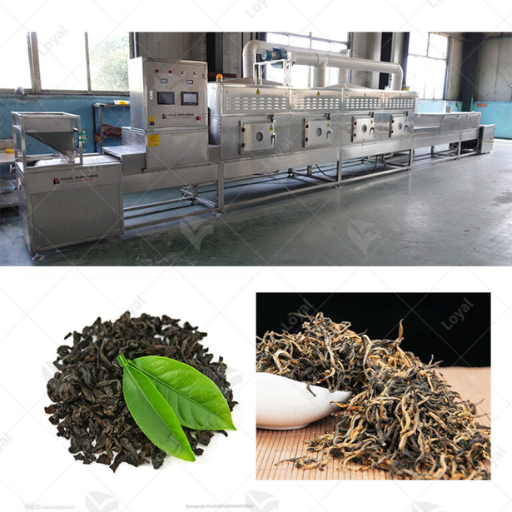
Selection of the right equipment requires a match between technical specifications and the particular flower type, production volume, end user, and facility constraints. There are a few parameters that tie up with the quality of the performance-the Return on Investment-ROI.
Output Rating and Capacity
Industrial microwave driers range from twelve-kilowatt laboratory units to over two-hundred-kilowatt continuous production lines. A twelve- to twenty-four kilowatts batch dryer can dry fifty to two hundred kilograms a day somewhat suited to small producers or boutique botanical processes. Tunnel kilns spanning thirty-five to forty kilowatts can handle five hundred kilograms to a ton a day. The largest doers can draw 2,000 to 5,000 kilograms per day, using an 80- to 150-kilowatt batch unit.
Of more importance than total power is power density, the units being watts by kilogram of product. All the common flowers would require three hundred to eight hundred watts per kilogram for optimal drying with no damage.
Temperature Control
The petals of flowers are extremely sensitive to temperature. The commercial practice in flower drying is generally effective within the range of 50-70 degrees Celsius. Delicate materials such as lavender buds and saffron threads are outside 40-50 degrees. The more heavy-duty chrysanthemum heads can take up to 90 degrees in the initial phase.
So it’s important to look in systems with non-contact infrared temperature monitoring and real-time PLC setting adjustment. Any contact probe may actually harm and may not internally measure the temperature of petals.
Conveyor Speed and Dwell Time
As the conveyor speed determines the time spent by flowers in the microwave field on systems with a continuous retention system this period of stay usually falls in the range of 3-15 minutes, depending on flower type, initial moisture content, and target final moisture. Variable frequency drives in this system also enable the operators to increase or decrease the speed to the magnitude indicated on frequency speed without hitting a stop or having slow down the process.
The open mesh type of conveyors allows escape of moisture vapor from the bottom, thus making drying more efficient. The belt widths rangez from 750mm on the lower end for the smaller lines to 1500mm for the highest lines.
Material Construction
Food-grade 304 SUS steel is the standard in the industry for the manufacture of flower drying equipment. All surfaces that come in contact with product or moisture-laden air should be made of stainless steel. Painted or coated interior surfaces must not be used as in case of poor handling of the painting or coating, these can off-gas or disintegrate into product.
PLC Automation and Recipe Controls
A programmable logic controller (PLC) with touch screen panels has become essential in modern systems where numerous products are being processed. This capability is a huge piece of technology to enhance flexible operations. For instance, a processor involved in drying roses one morning and chrysanthemums the following afternoon can switch recipes in literally a few seconds, enabling the machine to initiate activity right away.
Hence, they must have processes available at all recipes that have been programmed to store a number (not less than 20) of related details; they also would, usually, employ password-protected levels of entry to avert unauthorized observers from modifying profiles.
Vacuum for Blooming Flowers Producing Essential Oils
This more nebulous way of vacuum microwave drying in a brewing too specialized for cosmetics or pharmacy markets is well worth a good investment. Due to a pressure 5 to 10 kPa, the boiling point of water drops so that it can be dried in between 30-40°C; research on hemp flowers revealed that vacuum microwave drying at controlled power retained 85% of aroma compounds vis-a-vis 76% in convection drying.
Need help specifying the right power rating and configuration for your flower type? Contact our engineering team for a custom equipment assessment and competitive quote.
Preserving Essential Oils and Bioactive Compounds
The commercial success of many dried flowers resides in the unstable nature of the components. Essential oils evaporate; polyphenols oxidize; vitamins break down. The beauty of speed in microwave drying against nature; but speed doesn’t really help. It is through understanding how microwave energy interacts with botanical chemistry that allows you the potential to use ever ever so much more than what you should.
Rapid Drying and Its Effect in Reducing Volatile Oil Loss
Volatile oils in flowers are lost as soon as the temperature of their tissues exceeds thirty degrees. In a traditional hot-air-drying situation, the temperature is raised from four to twelve hours. Unfortunately, the oil is lost dramatically in this time frame.
In microwave drying, most of the drying is completed while minimal evaporation is taking place. Most flowers reach their target moisture contents between three and eleven minutes. The total amount of energy absorbed, reflecting the time required to do so, is at least one order of magnitude lower in microwave drying than in hot-air processes, holding up to better oil preservation.
Vacuum Microwave Drying for Maximum Aroma Retention
In vacuum microwave drying, when the goal is quite specific, which is to save a precious aroma, a grand result is achieved. Low pressure causes the boiling point of water to lower its temperature, thus allowing water’s separation at a stage that is just below the oil’s volatility. The process is of special significance: for plants like lavender, jasmine, rose, and osmanthus, where the quality of the scent determines the market class.
The economic drawback is that lower throughput and higher capital costs are associated with the method. In line-of-thinking, most process post-vacuum systems are specifically set aside for their most valuable products, while high-throughput standard microwave-tunnel approaches are employed for faster-moving products.
Research Data on Compound Retention
A study [27] on vacuum-microwave drying of hemp flowers found that such processing at two hundred forty watts retained eighty-five percent of the aroma compounds, with the sensory characteristics (e.g., taste, texture) being most closely related to those of the fresh material. Higher-powered microwaves inflicted darker coloration despite much faster processing, indicating that controlled moderate power levels crucially balance the quality factors.
On the other hand, reported studies confirm that compared to hot-air drying, a striking difference, acmeoxy-luteolin content and luteolin acid content are more effectively conserved by the microwave drying process for honeysuckle. These two markers are crucial for determining the therapeutic quality presumed for traditional Chinese medicine (TCM) purposes.
Impact on Nutraceutical and Pharmaceutical Applications
Each flower-derived ingredient that ends up in the nutraceutical and pharmaceutical supply chain has to face severer quality standards. Contaminant levels, active compound concentrations, and batch consistency all have to meet specification levels. Compliance is achieved by the quick processing of microwave drying, which minimizes microbial growth, the stable control of temperatures and the prevention of compound degradation, restriction of environmental pollutants ensures that none pollutes the batch.
Industrial Flower Drying Applications by Industry
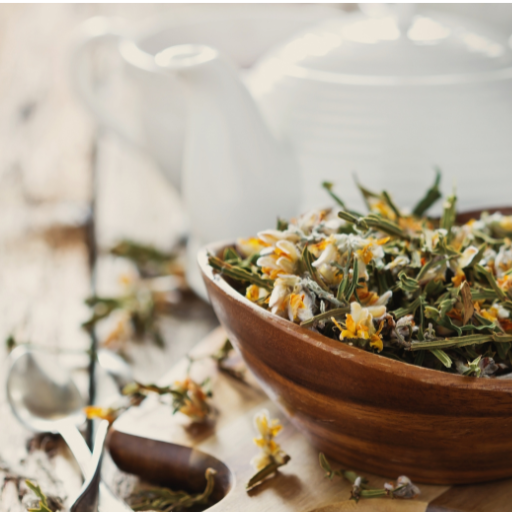
In the scope of different industries come varying demands for dried flowers, some of which have unique quality standards and benchmarked volumes. Understanding how dried flowers are used by each industry helps processors match equipment specifications with market requirements.
The tea and beverage industry
The specialty tea market represents the fastest-growing segment in global tea trade. Named chrysanthemum, jasmine, rose, and honeysuckle teas require dried flowers that have not only color and aroma but also the form that has been visually and aromatic to premium brands. Tea blenders cannot accept any batch with brown edges, broken petals, or off-odors because their micro-components affect infusion appearance and flavor.
The microwave drying process can come up with accepted visuomorph and aromatic standards that top-quality brands in tea require. Moreover, the sterilization effect is also ensuring the reduction in microbial counts to meet the export standards imposed by Japan, Europe, and North America.
Herbal Medicine and Traditional Chinese Medicine
There is recognition in Mr. Layne’s teachings between Heilpraktiker (that is, those who add a dimension of infusing love into life) versus the traditional singularly rights-based teaching approach in the somewhat psychological philosophical chivalry. In life chords philosophy, others feel that they are the real ones waiting around ideas of some empowerment; and this they do by raising their right-wing vibration to a level.
Cosmetics and Essential Oil Extraction
Soap, bath products, face masks, and body oils are typical applications in the cosmetic industry for dried rose petals, lavender buds, chamomile flowers, and calendula. They require whole, clean petals that have their color and scent maintained.
As far as this market goes, unlike the high-speed tunnel drying machines companies serving the market mostly adopt the batch cabinet dryers or the vacuum microwave systems. Lower throughputs are not a problem in this case, since the prices of such flowers at cosmetic level are generally five to ten times higher than those at tea level.
Potpourri and Decorative Floriculture
Decorative dried flowers for potpourri, arrangements, and crafts are placed for the highest importance on shape and color integrity. Pose-drying is best for the preservation of three-dimensionality, while air-drying or hot-blasting tends to flatten or shrink petals.
Edible Flowers & Gastronomy Applicationsins
Edible flowers are now much more represented than before and may find applications in the restaurant or the food industry. The processing of garnishing, salad-mixage, or flavoring flowers demands flowers that are wagging in food safety principles. Microwave drying, which is endowed with sterilization built into it, thus resolves this need without any form of chemical antibiotic intervention.
Microwave Flower Dryer Pricing and ROI
An economical justification is key in the acquisition of capital equipment. The following is simple in terms of justifications for such microwave plant drying equipment by both the procurement teams as well as plant managers.
Price Ranges by Power Tier
A limited amount of high-efficient process companies in the region regulate cost contingently between five thousand to twelve thousand dollars for one of the twelve to twenty-four kilowatt cabinets. Under the medium continuous tunnel regime, thirty to fifty kilowatt machines are cased at anywhere between eighteen thousand to forty-five thousand dollars. As for large-industrial sized tunnels, the cost is between sixty thousand and one hundred twenty thousand dollars for the incredibly varied tunnel apparatus, generally towering between eighty and one hundred fifty kilowatts. Heavier processing plants primarily require continuous lines running from two hundred kilowatts upward, starting prices generally centered around one hundred fifty thousand dollars.
Conveyor length, chamber height, number of magnetrons, sophistication of the system’s software, vacuum capacity, country of planting, and cost of transfer all play a vital role in determining the pocket estimation for different facilities.
Factors That Affect Cost
Customization is always the major variable with respect to cost. The inexpensive systems will have a more general design, less boosting factor and control specifications than a customized unit involving fabrications around its own requirements-whether through custom conveyors, elongated chambers, or cross-techniques. Cost of vacuum integration involves a twenty to forty percent cost increase to the regular system.
Installation and the training both depend. Some vendors provide remote installation instruction, with manual backup offered. Others offer on-site installation, including training of the operator. For first-time buyers in microwave equipment, on-site training is highly recommended.
Calculating ROI
Microwave flower dryers usually hit their return on investment from four different angles. First, throughput-related increase: A continuous microwave tunnel can replace four to six hot-air ovens and occupy less floor space in the process. Second, energy savings: Microwave drying consumes twenty to forty percent less energy per liter of water removed when compared to hot-air methods.
Third, quality premiums. Due to their superior color and aroma, microwave-dried flowers command prices ten to thirty percent higher than their air-dried counterparts. Fourth, labor savings: One employee is sufficient to run automatic batch systems; this is unlike the multiple workers needed to load, unload, and monitor batch ovens.
Most of the industrial microwave flower dryer projects achieve payback within twelve to twenty-four months from all the above four factors. The payback could also be below twelve months for high-value botanicals such as saffron, rose petals, and lavender due to the quality premiums alone.
Maintenance Costs
Magnetrons typically last 4000-8000 operational hours or so in an active commercial kitchen. However, magnetron replacements should be scheduled for every few years depending on usage. Conveyor belts, waveguide seals, and exhaust fans are scheduled for periodic maintenance and replacements. Typically, maintenance costs are three to eight percent of the cost of the original appliance.
How Shandong Loyal Industrial Engineers Flower Drying Solutions
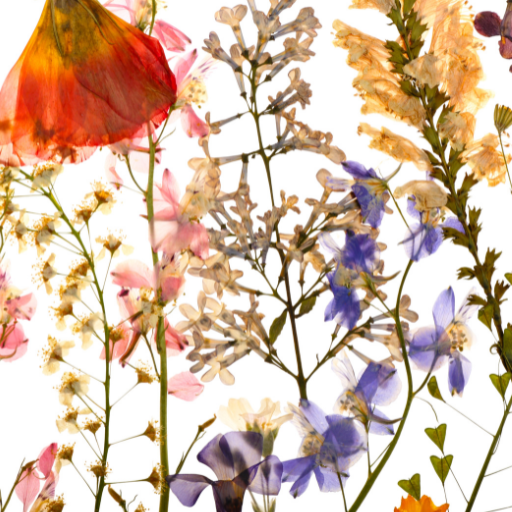
Shandong Loyal Industrial Co., Ltd. engages in the manufacture of microwave drying machines for botanic processors worldwide. Our engineering duo takes a project-based approach. They develop their point of view by taking independently into account each single job, not going from a catalog.
Application-Driven Design for Botanical Materials
The level of communications encloses an understanding of your particular flowers, target moisture content, daily quantity, and end purpose. A chrysanthemum tea operator may need a different zoning of magnetron that a lavendar essential oils industry. For a five-flower type operation running daily, robust recipe storage and swift changeover capability is needed.
On the other hand, what adjustments the experience of each of our clients from one client example to another are the width available for cloth, chamber length, power density, and thermal profile on your material characteristics, as opposed to some standard design.
Color-Fixation Expertise for Tea Flowers and Medicinal Botanicals
Color fixing, while stopping an enzyme’s rapid activation that causes the brown color to appear, required close monitoring of the initial power and dwelling time. These sorts of mechanisms allow for high-powered initial zones that can kill the polyphenol within those critical first ninety seconds. A gentler zone would then dry out the remainder of the moisture without burning.
Integration with Existing Production Lines
Usually, drying flowers is just one function in the whole line. Our dryers are designed to merge with the upstream appliances, such as sorting, cleaning, and cutting lines, as per the customer’s requirement. The conveyor systems, belts, and transfer devices can be tailored to your specific requirements and thereby can match your existing material handling infrastructure.
Global Installation, Training, and Technical Support
Our installation guidance, operator training, and continued technical support are available for clients from various countries. Our team of professionals have installed this system in areas across Asia, Europe, Africa, and the Americas. Real-time remote diagnostics via our PLC capability allow us to troubleshoot quickly, without the need to wait for an on-site visit.
Ready to upgrade your flower drying operation? Request a custom quote for microwave flower drying equipment tailored to your botanicals, volume, and facility layout.
Conclusion
Microwave flower drying is not simply an upgraded, faster means of drying flowers than traditional methods; this is a fundamentally different drying technology that may change what is considered commercially viable for floral processors. Drying times reduced from days to minutes, preservation of hue and fragrance that annually yield top prices, and avoidance of chemical sanitation all contribute to enhancing the competitiveness of the method over time.
In conclusion, there are a few major takeaways from this manual: one is that, for quicker polyphenol oxidation deactivation, microwave drying retains color; the second is that it maintains essential oils by minimizing thermal exposure, and the third is that microwave drying combines advantages from other forms of drying, meaning that, with respect to those parameters typically important to commercial flower drying-successful drying delivered faster and cheaper and in the consistency and caliber demanded.
The choice of equipment necessary for different lots shall be subject to flowers and volume, and end use. Batch chamber will apply to small quantities or multi-product operations. On the other hand, continuous tunnels will be ideal for high-volume tea and herbs. Vacuum microwave equipment will enable the best value to be extracted from the essential oil types found in botanicals.
If you are evaluating equipment for a new facility or considering an upgrade from traditional drying methods, our engineering team can assess your material characteristics, production targets, and facility constraints to recommend a configuration that delivers measurable ROI. Contact Shandong Loyal Industrial today to schedule a technical consultation and receive a competitive equipment quote.