





In March 2024, the banging of reports in his office disturbed Marcus Chen, operations director of a mid-sized spice processing operation in Gujarat. His gas-fired hot air tunnel was running six hours a day, well past break-even, but the product rejection rate had already swung from an acceptable 5% to a toe-curling 8%. Just before closing calculations of the dryer energy burden distribution, Marcus saw a dauntingly clear picture: two-thirds of the energy consumed here gets laid waste drying the last wet third away. That was no machinery problem; it was the very chill of nature.
I am sure that any manager of a production facility who reads this may sense some kind of connection with Marcus’s story. It is not on some abstract matter such as microwave or hot air drying-but rather on a decision about capital that locks in energy costs, production capacity, and product quality for the following decade. Filtering altercations between marketing claims in order to get some data you can trust; that is your challenge.
Within this paper, we compare microwave drying and hot air drying in terms of speed, energy efficiency, product quality, and total cost of ownership, thereby providing performance data, actual production case examples, and a clear formula for decision making in connection with your specific material characteristics and volume.
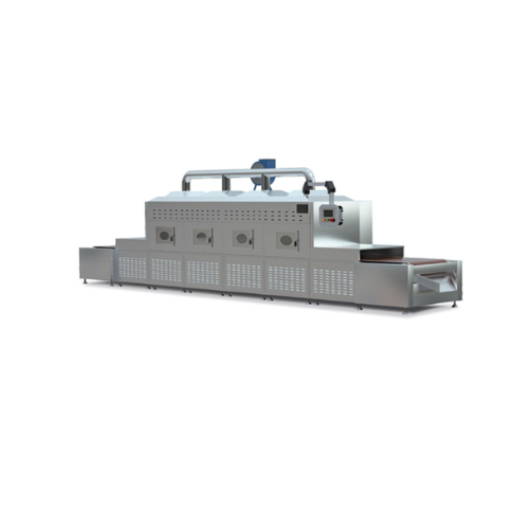
Want to see how microwave drying performs with your exact product? Explore our industrial microwave drying machine line and request a custom process assessment.
How Hot Air Drying Works (and Where It Fails)
Hot air drying is the oldest and the most commonplace in industry dryings. This accounts for more than 85% of industrial dryers globally. This method is simple: hot air flows over the surface of the material where moisture is released from the surface, and the heat gradually moves to the core through thermal conduction.
Yet simplicity is the major drawback here.
The outside crust-which is created by expelled moisture as water content drops in the outermost layers of a product-works as a thermally insulative, moisturizing layer. This case-hardening results in the trapping of some moisture within the product, further enforcing drying at longer and hotter temperatures. According to comparisons done on industrial equipment, traditional hot air systems have been recorded to squander a maximum of 35-45 percent of total energy input in hot exhaust gas and have been known to strive in the range of 15-25 percent overall thermal efficacy.
The result of the process is what can be best described cruelly as the falling-rate period. During this phase, which can fill two-thirds of the total cycle time, the dryer tries to drive the remaining water pockets out of the compound shell back to the outside by consuming fuel or electricity. So long as product quality gets dragged down with prolonged heat exposure indeed due to the destruction of nutrient-susceptible substances; various studies indicate a 60%-70% loss of vitamin C and up to 50% antioxidant degradation in fruits. The deepening of color, toughening of texture, and loss of rehydration concern the collapse of the cellular structure under thermal stress.
Hot air dying, for bulk items of low value, still has its own place where processing speed and the retention of nutriments are new ideas. The hidden costs accelerate quickly for remaining important things.
How Microwave Drying Works: Volumetric Heating Explained
In comparison to other drying methods being contemplated, microwave drying operates in contradistinction, conjuring non-analogous and intellectually distinct physical principles. Industrial microwave dryers produce electromagnetic radiation at 2.45 GHz or 915 MHz to penetrate the material rather than heating the air around the product. These waves excite polar molecules-primarily water-into vibration, thus inside-outwardly generating heat.
Volumetric heating is an advantage in other ways as well, ending the surface-to-core gradient and the moisture is heated first. This internally produced vapor pressure actively pushes the remaining liquid to the surface. The interior never to be outpaced by the exterior; no case hardening. No falling-rate bottleneck because energy directly couples to the water molecules no matter what the surface conditions might be.
There is no immediate provision of operational advantages. In microwave systems, there is no warm-up period: you initiate and couple energy to your product within seconds and stop just when the desired moisture content is reached. This temperature control is precise to within ±1°C, which is critically important when performing the drying operation of pharmaceuticals or saving micronized oils in herbs and spices.
Frequency selection also matters for industrial applications. The 2.45 GHz band is common for smaller batch systems and general-purpose drying. The 915 MHz band, widely used in large continuous tunnel systems, penetrates deeper into high-moisture materials. That deeper penetration is why continuous microwave dryers can handle thick product beds or dense materials like rubber and protein pastes that would stall in a hot air tunnel.
Head-to-Head Comparison: Microwave Drying vs Hot Air Drying
When plant managers evaluate a technology switch, they need numbers they can plug into a budget proposal. The table below summarizes the quantified differences that matter most at the production line level.
|
Factor |
Microwave Drying |
Hot Air Drying |
|---|---|---|
|
Drying Speed |
10-15x faster; no warm-up required |
Slow; long falling-rate period dominates cycle time |
|
Specific Energy Consumption |
0.56-1.2 kWh per kg of water removed |
1.5-4.0 kWh per kg of water removed |
|
Thermal Efficiency |
30-50% |
15-25% |
|
Heating Method |
Volumetric (inside-out via electromagnetic waves) |
Convective (outside-in via heated air) |
|
Temperature Control |
Highly precise, often ±1°C |
Less precise; requires higher operating temperatures |
|
Product Quality |
No case hardening; better color, nutrient retention, and uniformity |
Risk of crusting, uneven moisture, thermal degradation |
|
Capital Cost |
Higher initial investment |
Lower upfront equipment cost |
|
Operating Cost |
Lower per kg due to speed and energy efficiency |
Cheap to buy, expensive to run at scale |
|
Floor Space |
Compact for equivalent throughput; 20-35% smaller footprint |
Often requires more floor space for air handling and chambers |
|
Scalability |
Easily integrated into continuous automated lines |
Often batch-oriented; harder to retrofit for continuous flow |
The speed difference is remarkable. In fruit-processing applications, microwave systems have demonstrated moisture reduction speeds of 15% every minute as compared to the slow-moving conventional hot-air method at 1-2% every minute. That translates into direct increase in daily throughput without need for plant expansion, for operations running several tons an hour.
When it comes down to energy efficiency, the story repeats itself, as expressed by this last statement. Radiation in microwaves goes straight to the product as opposed to surrounding air and chamber walls. A particular industrial case study showed that hot air drying required 7,500 kJ per kg of removed water plus an inflated energy need for ventilation, while microwaves required about 4,400 kJ per kg plus lower energy needs.
Ready to model the ROI for your specific throughput? Speak with our engineering team to run energy and payback calculations against your current hot air operating costs.
Product Quality: What Happens Inside the Material
See, the greatest speed and saving cannot hold when the final creation is unable to qualify quality assessment. This is where most original distinctions are seen, between microwave drying vs. hot air drying.
For a hot air system, moisture gradient stress is the inevitable creation. The surface dries and shrinks while the core is wet and retains the bulk. This differential shrinkage causes distortion in the product, cell walls to crack, drying hardens produce case, that heavy, sinewy texture for which the hard dry texture found in case hardening is known. It soaks up hardly enough water into itself, the sealed surface hindered, making the product less moist. For food processors: finished product with pegged mouthfeel will lead to poor cooking performance. For pharmaceutical manufacturers: it will mean uneven dissolution rates of tablets.
With microwave heating, this entire issue can be avoided. Since heat generation is the same throughout the material, shrinkage occurs uniformly with minor intensity. Consequently, the cellular structure remains more intact preventing damage while preserving the rehydration capability and surface texture. Improvement in color is possible since no scorch would occur on the sample substrate due to keeping temperature low, eliminating scorching or oxidation caused by long contact with hot air.
Nutritional data reinforces the advantage. Microwave-dried fruits can retain up to 90% more Vitamin C compared to air-dried alternatives. Polyphenols, antioxidants, and sensitive proteins show similar protection because the product is not held at high temperature for extended periods. Vacuum microwave drying systems take this further, operating at 30-50°C to protect compounds that degrade above 60°C.
Credibility requires honesty; nevertheless, freeze-drying is still a very industrious process and provides a valuable raw material for multiple applications, ranging from instant coffee to specialty pharmaceuticals, or even from fruit to nutraceuticals. Hot air drying was efficient for the drying of low bulk value grain, accepting higher losses of nutrients in the process. Microwave drying has been the middle choice in the sense of two extremes: many of the high qualities are similar to freeze-drying, yet the cost and time involved are too dear.
Total Cost of Ownership: A 5-Year View
Sticker shock in capital equipment is no fiction. When compared with equivalent hot air ovens, industrial microwave dryers almost always command a higher capital cost. Initial prices range widely, from a low of what might be barely affordable — about $150,000, to levels north of $3 million for large custom lines, while a hot air tunnel of the same rating would probably cost 30-50% less at the time of purchase.
But capital costs are just the beginning of a 5-year budget.
Marcus Chen knew that when the full picture was modeled on his system in Gujarat, the figures spun a different tale from the purchase price alone. The continuous microwave system dropped energy consumption from 4.2 to 0.9 kWh/kg at the time of production. Losses were slimmed down from 8% to a level south of 2%, thereby expanding semshkinable outputs that were previously abandoned. The drying time was curtailed from hours to minutes, which implied that three times as much material could be processed by the same floor area each shift.
Money cleaved out for the system got stuffed back four times over in 18 months.
This payback period is not uncommon in facilities operating at significant capacity. When factored in with energy savings, reduced rejection, a better value through the conveyor, and lower maintenance (no burners, heat exchangers, or extensive duct work to service), total cost of ownership of microwave equipment has usually put it below hot air processing in the two-to-four-year time frame. It can often happen even sooner if there are extremely high energy costs or exacting product quality requirements.
The discount in cost and capital net of the return, and the short-to-firm lead time together might dethrone microwaves in favor of hot air for customers operating very small batches at this equipment’s margin. Microwave technology, on the other hand, tends to make strong economic sense for almost everyone else.
When to Choose Which Technology
There does not exist a single right drying method for all materials and all budgets. The decision-making matrix below speaks to those industrial run parameters that are far more realistic patterns that we have seen among the food, pharmaceutical, and industrial material facilities based on field data.
Choose Microwave Drying When:
- You process heat-sensitive or high-value products where quality directly affects pricing
- Your facility operates in a region with high energy costs or carbon regulations
- Floor space is limited and you need equivalent throughput in a smaller footprint
- Your customers demand strict uniformity, nutrient retention, or clean-label credentials
- You run continuous high-volume production where throughput drives revenue
Choose Hot Air Drying When:
- You process bulk, low-value commodities where some quality degradation is acceptable
- Minimizing initial capital expenditure is the primary constraint
- The product is not heat-sensitive and drying time does not affect production scheduling
- You already own fully depreciated hot air equipment with low utilization
Choose a Hybrid System When:
- You have existing hot air infrastructure that still has useful life
- You want to accelerate the falling-rate period without replacing the entire line
- Your product benefits from a two-stage approach: hot air for initial bulk moisture removal, microwave for final precision drying
- Budget allows incremental upgrade rather than full replacement
Many processors are surprised to learn that hybrid configurations can reduce total drying time by over 50% and cut energy use by nearly 60% compared to hot air alone. Our engineering team designs both pure microwave and hybrid microwave-plus-hot-air systems tailored to existing production lines.
2026 Technology Trends Shaping the Decision
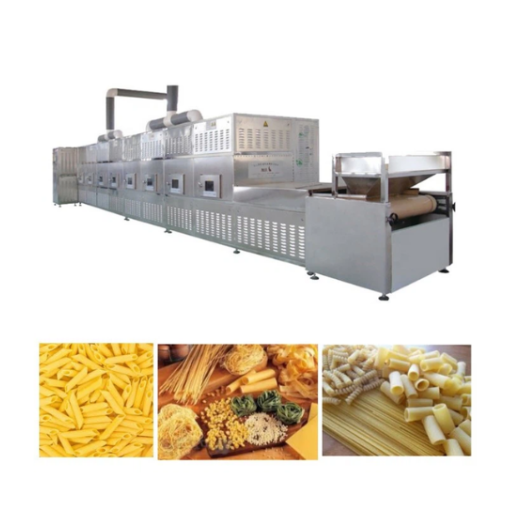
The industry mammoth of the drying process on earth is tilting towards a shifting phenomenon at a speed that is faster than witnessed by a number of facility managers. Three distinct trends in particular are seen existing in microwave drying versus hot air drying.
First, solid-state microwave generators represent the technology upgrade over the traditional magnetrons. With time, magnetrons degrade and need replacement. An outcome is gradual power drift, leading to drying irregularities. Solide-state part supplies precise power control, fast on-off switching, and exceptionally long service life. Precision is significant when drying pharmaceutical products and temperature-sensitive food powders where batch spoilage is likely under just a few degrees of temperature alteration.
Another significant factor that is really taking off is that AI-driven instrument controls are available at large scale. For one contemporary example, these products can measure moisture content in real time, adjust the power density as the product goes through the tunnel, and log each full temperature history for compliance documentation. Minimization of human error—less from the operators’ dependence on eyebrow-raised calculations, more from the system managing exactly what it is supposed to do-tightening up quality control, and waste reduction are the consequences.
Third, sustainability regulations are pushing us away from hot air systems boasting fossil fuels. “Microwave drying is 100% electric power: it should then situlate very well with renewable power patterns and is an alternative far from any carbon tax or emissions cap that many say will hit gas-fired industrial equipment later on. For organizations that want to fulfill corporate sustainability objectives, achieving this synergy has now become a point for the board of directors.
The consequences of both trends have been to elevate microwave drying from a potential alternative into the mainstream for mid-to-high-value industrial needs.
Conclusion

Microwave drying versus hot air drying is not actually about the purchase price, but the total cost consideration. Hot air equipment is cheaper to buy and is good enough to operate; unfortunately, it leads to higher energy costs, longer cycle times, and quality constraints that cannot be avoided as soon as case hardening and falling-rate period product. Microwave drying means high capital cost, but the payback here comes in much less operational cost, much less maintenance, better quality of output with higher throughput.
The key takeaways are straightforward:
- An amazing thing happened: Microwave drying is 10-15 times faster, needing 50 percent less energy consumption for every kilogram of water evaporated
- This way, colour, texture, nutrient retention, and uniformity all go in favour of product enhancement
- Usually, microwave drying rocks the capital-invested ownership battlefield within 18-36 months of commercial-volumetric operations
- Hybrid configurations suggest a feasible improvement over the hot air one that is available today
- 2026 technology trends in solid-state power and AI control are widening the performance gap further
If you are evaluating a drying technology decision for your facility, start with the numbers that matter to your specific product and volume. Our engineers run custom process assessments that model energy savings, throughput gains, and payback timelines against your current operating data. Request your custom microwave drying assessment today and get a tailored equipment quote engineered for your production line.