




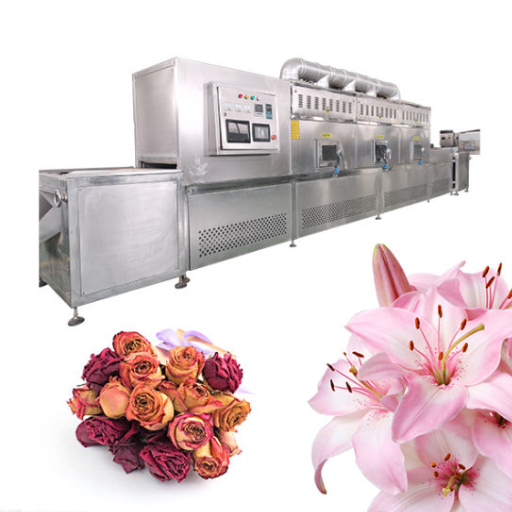


Typical convection dryers spend two-thirds of their cycle time removing the final third of moisture. For the chemical processor, the bottleneck cuts more than just production. It compromises the very powders, catalysts, and battery materials you wish to serve your customers.
Should you have ever dug into a batch out of a tray dryer and stumbled upon a hard, dry shell holding slightly wet powder inside at the same time, you pretty much know the issue. Microwaved chemical drying equipment addresses this by heating the mass from the inside out. The process is relatively fast, converting drying times from hours down to minutes and simultaneously leaving the particle structure intact, preventing the thermal degradation from deteriorating, and providing continuity from batch to batch.
This guide is for anyone looking to understand the technical principles involved and the best points of semi-industrial installations of THA reactors for various processing applications, as they investigate the design of such systems. You will be able to explore techniques and applications involving volumetric based heating technology, catalysts, and polymers for various applications within a set framework for general configurations available on the market.
Chen Wei, a process engineer at a petrochemical facility in Jiangsu, faced this exact challenge last year. His team used conventional tray dryers to process microsphere catalysts. The surface of each granule dried within two hours, but core moisture remained at 8%. That uneven drying reduced catalytic surface area and forced his team to rerun batches. After switching to a chemical microwave drying equipment setup, Chen cut his drying cycle to under 15 minutes. More importantly, moisture variance dropped below 0.5%. His catalysts now perform to specification on the first pass every time.
Want to see how chemical microwave drying equipment performs with your specific material? Contact our engineering team for a custom assessment and tailored recommendations.
What Is Chemical Microwave Drying Equipment?
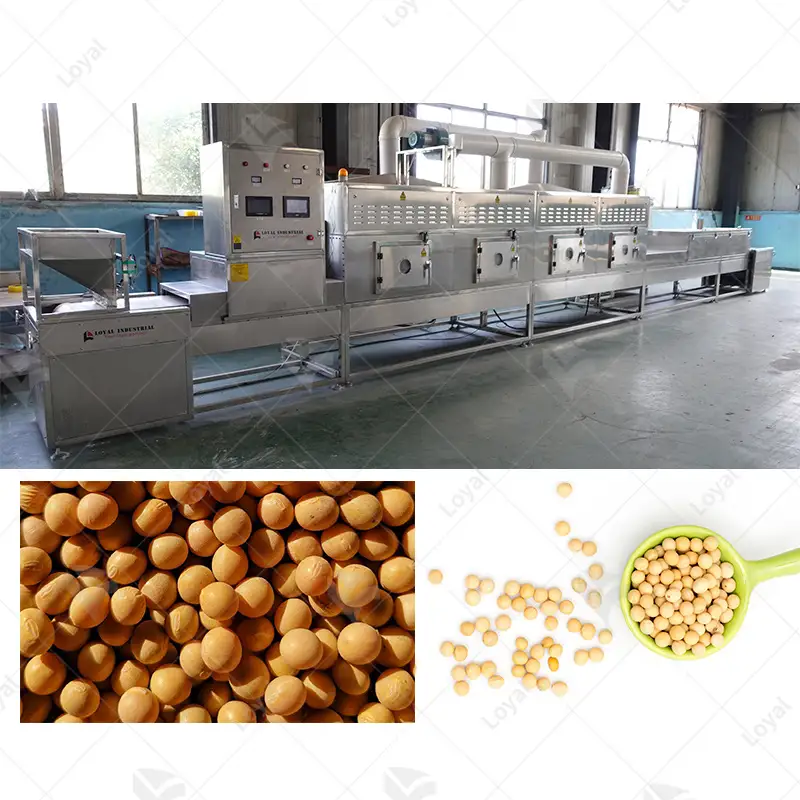
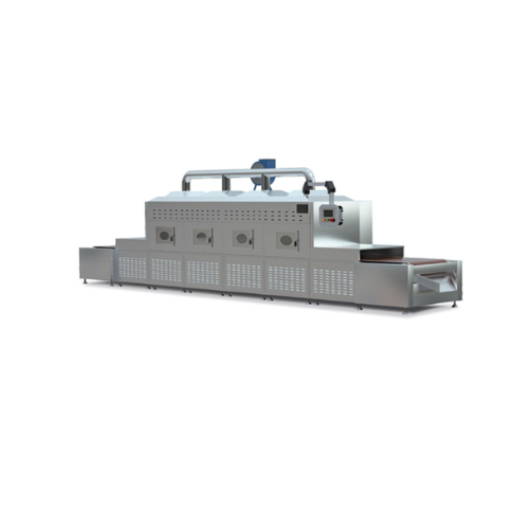
Chemical microwave drying equipment is a type of dryer specifically designed for chemical powders, catalysts, pigments, inorganic salts, polymers, and advanced materials. Instead of depending on hot air or hot surfaces, these machines make electromagnetic energy be converted directly into heat within the material to be dried.
The heart of the system is the magnetron. The latter converts electrical energy into microwave radiation, typically at a frequency of 2.45 GHz or 915 MHz. The waves travel through a waveguide and enter a sealed stainless steel drying chamber or tunnel. Here, they penetrate the chemical powder and excite the polar molecules — mainly water and some solvents. This rapid molecular vibration causes friction heat to be generated quickly and uniformly throughout the entire volume. Engineers term this volumetric heating or dielectric heating.
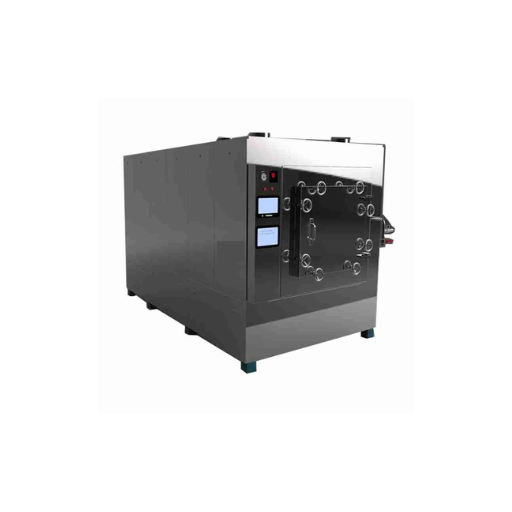
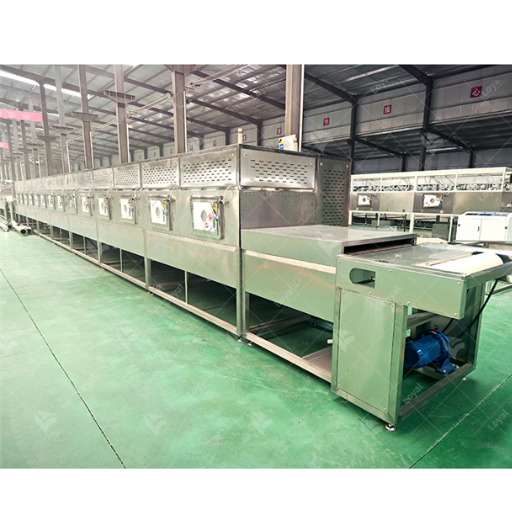
Your production requirement will essentially dictate the configuring of the system. Tunnel dryers that run materials on a conveyor belt non-stop are ideal for high volume whereas batch ovens come in handy under lower-run or scale-up operation conditions, a case of a system that requires vacuum applied to the material to reduce water boiling point to 40–50°C so as to avoid heat and resultant decomposition of sensitive chemicals when carried at atmospheric temperatures.
Meanwhile, the magnetron, waveguide, applicator chamber, conveyor or tray system, PLC control panel, cooling system, and dehumidification exhaust stand as basic components. New systems from manufacturers like Shandong Loyal would also feature temperature-monitoring interlocks and power settings adjustable from the PLC control to prevent overheating or formation of hotspots.
How Microwave Drying Works for Chemical Materials
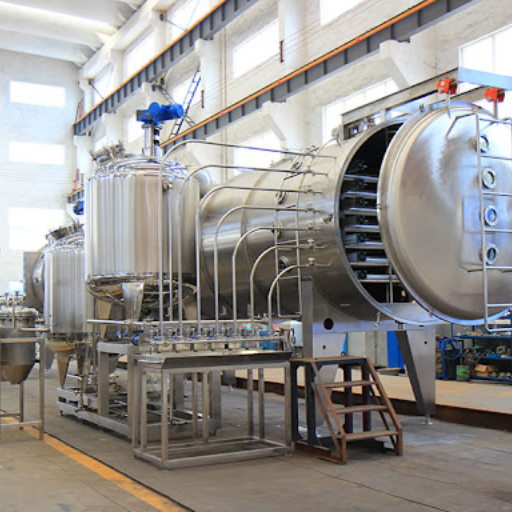
Conventional drying methods rely on heat acting mainly on the free surface. Hot air or steam impinges on the surface, and temperature gradient makes the heat to slowly move towards the middle through the process of heat conduction. For dense chemical powders and catalysts, this is a problem. The outer skin dries too quickly, forming a hard shell, which allows no moisture to escape through the tissue and be removed on the drying process. This creates an increased chambering effect. Engineers call this case-hardening, or agglomeration.
This drying method aims at excluding case-hardening. The microwave goes through the base powder and agitates the polar water molecules found all over the material. The molecules oscillate and rotate with extreme speed through the alternating field, creating heat in the interior layers of the moist material, not just at the surface.
Due to the high heat generation, the water and solvents are stripped off in less than no time. The internal vapor pressure releases the water vapor, rushing downwards to the dryer under dehumidification, which then suffocates the residual content. The dryer dewpoints the rest now.
Add a vacuum to the operation for temperatures that might kill the chemical products. A microwave vacuum dryer is set up with a pressure of 0.08 to 0.1 MPa and is capable of boiling water at a temperature of somewhere around 40 to 50 degrees Celsius. So, as a result, liquidity containing super-vulnerable APIs, pharmaceutical intermediates, and advanced ceramics can be easily dried out, with the heat being an unfavorable one.
Li Mei, a quality manager in a Shenzhen plant-confected for lithium battery cathodes-also learned this the hard way. Her force dried lithium-cobalt oxide by regular hot air at 120°C. The material degraded, and particle sizes altered, resulting in a drop in electrochemical output by 12%. When a team had successfully refurbished the drying apparatus with a vacuum microwave dryer, they now dry with the same material at up to 50°C. Drying time was reduced from an excruciating four hours to an unbelievably convenient 25 minutes. Battery capacity tests now also measure up to the last traded level, while scrap rates have decreased as much as 18%.
Chemical Microwave Drying vs. Traditional Methods
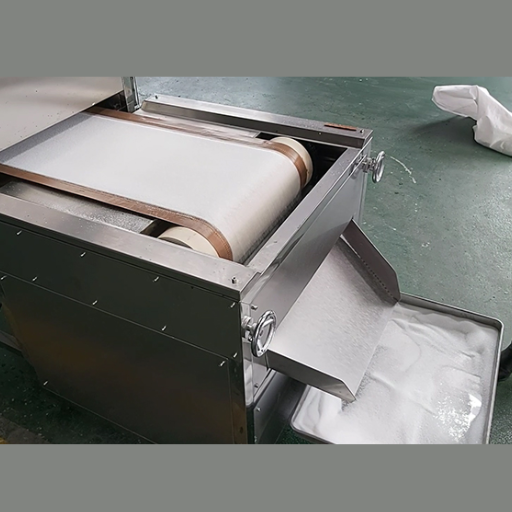
Plant managers evaluating capital equipment upgrades need hard data. The table below compares microwave drying against conventional hot air and tray drying for chemical processing applications.
|
Factor |
Chemical Microwave Drying |
Traditional Hot Air/Tray Drying |
|---|---|---|
|
Drying speed |
50–80% faster |
Slower due to surface-to-center conduction |
|
Energy efficiency |
30–60% lower kWh/kg |
Higher losses to air and equipment |
|
Uniformity |
Even throughout volume |
Risk of case-hardening and trapped moisture |
|
Temperature control |
Precise PLC control, vacuum option |
Coarser control, limited low-temp capability |
|
Product quality |
Preserves particle integrity, color, and activity |
Higher risk of thermal degradation |
|
Capital cost |
Higher initial investment |
Lower upfront cost |
|
Operating cost |
Lower lifetime cost due to energy and throughput savings |
Higher ongoing utility and labor costs |
|
Footprint |
Compact tunnel or batch design |
Often requires larger floor space |
|
Safety |
Closed system, no combustion, no dust generation |
Open airflow can create dust and combustion risks |
The most distant future to claim chemical processors is who are the disposal of case hardening?. Once catalyst granules are dried in a tray dryer, around 2% surface moisture will tell on their outer side, while the 10% when measured at the center. This uneven profile does not allow effective reaction and can spoil downstream processes. Microwave drying, on the contrary, targets water molecules directly; hence, the high moisture content zones receive more energy, providing uniform moisture content from surface to core.
The supreme victory lies in energy efficiency. This system is supposed to heat the surrounding air, the trays and the enclosure walls of the conventional dryer before the product ever gets reasonably warm. But the microwave energy goes right ahead into the water molecules and cannot serve itself to waste any thermal mass. Plants have testified to a 30-60 % reduction in the values of specific energy consumption through disposal on microwave systems.
Well, the conventional dryer wouldn’t have been utilized at all. For low-valued and non-heat-sensitive bulks, where capital cost constraints and quality requirements can be kept at a minimum, a basic hot air dryer proves to be the best solution. The decision is easy; hence if your property needs a heat-sensitive material-and therefore valuable-or a precise moisture content’s uniformity, chemical microwave drying becomes the best investment.
Key Applications in Chemical Processing
The chemical microwave drying equipment is popular for utilizations across a variety of materials and industries. The subsequent are five different industry applications where this new technology is advantageous.
Chemical Powders and Inorganic Salts
Inorganic salts, carbonates, sulfates, and oxides have frequent application in industrial chemistry. For example, stabilizing moisture in sodium chloride, calcium carbonate, magnesium carbonate, copper sulfate, and borax is a significant issue at this stage because they are to be packaged or further processed.
Proverbially, traditional dryers are unequipped to handle these powders because they agglomerate and form a case. This way, microwave drying efficiently removes both free water and crystal water. An excellently tuned system could remove moisture from a chemical powder from 40% to sub-1% within 3–15 minutes. The product can then be packed easily and fed into container lines and reactors due to its free-flowing properties.
Catalysts and Fine Chemicals
A catalyst performance totally relies on surface area, pore structure, and even moisture distribution. Active sites get deactivated when a catalyst is drier in some areas while some of the active reactant sides finish catalytic reaction.
Microsphere catalysts, chemical pellets, and nano-scale powders profit well from volumetric heating. Microwave radiation penetrates the granules uniformly that leaves no harsh crust around the grain to lock in moisture, as in conventional equipment. Once the shift occurred to microwave drying, the plants observed improved activity of catalysts and increased catalyst service life.
Battery Materials
The world changing towards electric vehicles and grid storage has led to an explosion of demand for lithium-ion battery materials. Cathode powders, such as lithium cobalt oxide, lithium iron phosphate, and nickel hydroxide, require very accurate drying to retain their electrochemical performance.
These materials are also highly temperature-sensitive. Exceeding 70–80°C can alter crystal structure and reduce battery capacity. Microwave vacuum drying solves this by removing moisture at 40–60°C. The process is fast enough for high-throughput production yet gentle enough to protect the material’s chemistry.
Polymers and Resins
Polymer processors face a unique drying challenge. Materials like PET and polyamide must be dried before extrusion or molding. Any residual moisture causes hydrolysis, molecular weight loss, and degraded mechanical properties.
SMC and other manufacturers have pioneered microwave polymer dryers that are cutting processing time dramatically. A case dated to airbag manufacturing dried recycled polyamide powder from 20 percent to 0.5 percent moisture without exceeding a temperature of 70°C. The system met ATEX safety standards and eliminated the need for molecular sieves. Changeover times shriveled from 5.5 hours down to less than one hour.
Zhang Ming, plant manager at a polymer compounding facility in Shandong, China, is a case in point. Four different conventional desiccant dryers ran in parallel to support production; after he had the MW dryer installed, one was retained as a backup and stopped, 35% in terms of power consumption, and with floor space saved, the plant installed a new extruder using the same old building.
Pigments, Ceramics, and Advanced Materials
Speciality pigment, silicon carbide, alumina, zirconium compounds, carbon black, all necessitate uniform drying of moisture before sintering, coating, or packaging. Inconsistent drying leads to incorrect colors, structural weaknesses, and non-release of batches.
These products require dry uniformity in behavior, and microwave offers the expected uniformity. Because microwave energy targets water molecules, it keeps the temperature of these pigments or ceramic matrixes down. As temperatures in the matrix decrease, color uniformity is improved and the tortured integrity of the particles is kept in place throughout the drying process.
Ready to cut your drying cycle time by 50–80%? Request a tailored quote for your chemical processing line and see how a custom microwave system fits your facility.
Vacuum Microwave Drying for Heat-Sensitive Chemicals

Some chemical compounds experience degradation due to parabolic temperatures when atmospheric drying methods are used in their processing. Pharmaceutical intermediates, nutraceuticals, probiotic cultures, and certain catalysts begin to corrode, oxidize, or deactivate above heat levels of 60 to 70°C. For such cases, vacuum microwave drying is a matter of necessity rather than choice.
It is all in simple physics: Lowering the pressure in the drying chamber lowers the boiling point of water. For a vacuum of 0.08–0.1 MPa, the water begins to evaporate instead at roughly a temperature of 40–50°C instead of 100°C. With the decrease in boiling temperature and the intense microwave-induced volumetric heating, a significant amount of moisture evaporates at temperatures gentle enough to retain the most delicate species in the material.
The typical parameters for chemical vacuum microwave drying:
- Vacuum pressure: 0.08–0.1 MPa
- Operating temperature: 40-90°C
- Moisture reduction: from ~40% to 0.5% in 3–15 minutes
- Construction: Stainless steel construction (~95%) to support corrosion resistance.
- Control : Temperature and Pressure sensing through PLC in real-time [active moment].
It gives much more than temperature protection. It keeps contaminants less, preventing oxidation since low pressure keeps air contact in check. It ensures long-term flowability of powders by playing in favor of surface hardening that would have otherwise emerged through the hot air of an atmospheric setting. It ensures safety for volatile or explosive powder materials by conducting high-stakes procedures in a confined and inert environment.
Safety, Compliance, and Equipment Design for Chemical Plants
The facts of the safety and environmental regulations are here: and all drying systems should comply with these standards without fail.
ATEX compliance is crucial for fine chemical powders, solvents, or volatile organic compounds moving along the floors of these installations. Most dust may trigger explosive atmospheres once a certain level of dust reaches the atmosphere. Drying equipment with ATEX rating is likely to be made shockproof and involves explosion-proof magnetrons, sealed waveguides, and flameproof electric enclosures to prevent sparks that ignite dust.
Construction materials are another concern. Highly corrosive solvents and reactive chemicals need steel construction of >95%, usually grade 304 or 316. These components should resist corrosion over years of continuous operation, plus the inbox, conveyor belts, and exhaust systems.
Microwave shielding is another non-negotiable. Industrial dryers use multi-layer metal shielding and chokes around all openings to prevent microwave leakage. Properly maintained systems operate well below international safety limits for electromagnetic exposure.
PLC-controlled safety interlocks provide additional protection. Temperature sensors, pressure transducers, and moisture monitors feed data back to the control system in real time. If parameters drift outside safe ranges, the system automatically reduces power or shuts down.
Closed-system design offers two more advantages. First, it prevents contamination of the product by airborne particles. Second, it captures dust and solvent vapors at the source, improving workplace air quality and simplifying environmental compliance.
For more details on our full range of industrial processing solutions, explore our microwave drying machine product line or learn about complementary systems like our microwave sterilization equipment and microwave thawing machine.
Selecting the Right Chemical Microwave Drying System
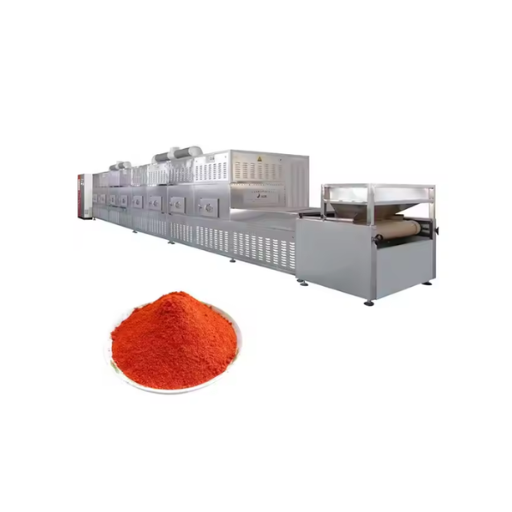
The ideal choice requires that you know your material, throughput, and site constraints inside out. The following framework should guide you in making the right choices.
Start with material properites. Your microwave oven may not work with all materials. A high dielectric loss will dry your material evenly and quickly because it easily absorbs microwaves; hence such materials respond well to microwave environment. Nonetheless, materials with low dielectric loss may require a higher setting of power to heat up. No worries about testing as reputable producers will undertake the test for microwave compatibility and proper power settings of your material.
Then quantify the throughput. For vast high-hour-volume manufacturing facilities operating continuously 24:7, a continuous conveyorized operation seems mandatory whereas for boutique operations of many changes over or even into multiple products, affording operating time to these little batch ovens might be preferable. In any event, heat-sensitive material calls for vacuum either during or before baking, irrespective of batch quantity.
Evaluate factory integration first, as this cannot just solve the problem of drying textiles better but will leave much more space for other kinds of systems. Industrial microwave power supplies from 3-phase main source of supply have produced the most effective drying process for testing applicants before the customers in under 25 minutes.
Itemize the scope of customization since chemical processes do not make for one-size-fits-all. Look for a vendor who provides custom chamber dimensions, conveyor belts made to order like Teflon or food-grade size mesh to suit-your-requirement suits and various hybrid bed configurations of microwave with hot air or vacuum along with on-site installation services and an engineering team for assembly tips.
In conclusion: When after-sales needs are considered, what the brand does counts as much as what it offers. Escape from contracts with companies. Look for people who are onsite for installation, equipment training, and responsive tech support from their site.
For a deeper look at specific chemical powder applications, visit our dedicated chemical powder microwave drying equipment page.
Conclusion
Chemical microwave drying equipment indeed represents an improvement over conventional hot air- and tray-drying techniques for chemical processors, given that the technology assures no case-hardening, 50–80% less drying time, and a 30–60%-lower energy bill. More than this, it ensures particle integrity, catalytic functioning, and electrochemical activity-the three areas of paramount importance defining the performance of any goods.
Take-aways:
- Volumetric-heating procedures enable the development of heat inside the interior of the material, and not just over the surface, the operational effect being that water may be forced out from the deeper part of the material, so moisture does not become trapped and adhesion does not take place as in conventional dryers.
- The vacuum microwave drying process ensures the removal of low temperatures between 40 and 50°C that makes the whole process vital for thermally sensitive chemicals, battery materials, and pharmaceutically important intermediates.
- Chemical powders, catalysts, battery cathode materials, polymers, and advanced ceramics are all the most important applications of microwave drying.
- The construction of ATEX-rated systems and stainless steel chambers in compliance with safety and regulatory standards at chemical plant environments are essential.
- Choosing the right system to meet your needs includes analysis of the material’s dielectric properties, throughput, and the requirements for temperature sensitivity and integration with your factory.
Microwave drying is no longer seen as an avant-garde technology reserved for very specific applications; instead, it is expected by competitive chemical manufacturers who require speed, efficiency, and uncompromised quality.
Ready to upgrade your drying process? Speak with our engineering team today to configure a custom chemical microwave drying system for your facility. We will analyze your material, throughput, and space constraints, then deliver a tailored quote designed to cut your costs and improve your output.